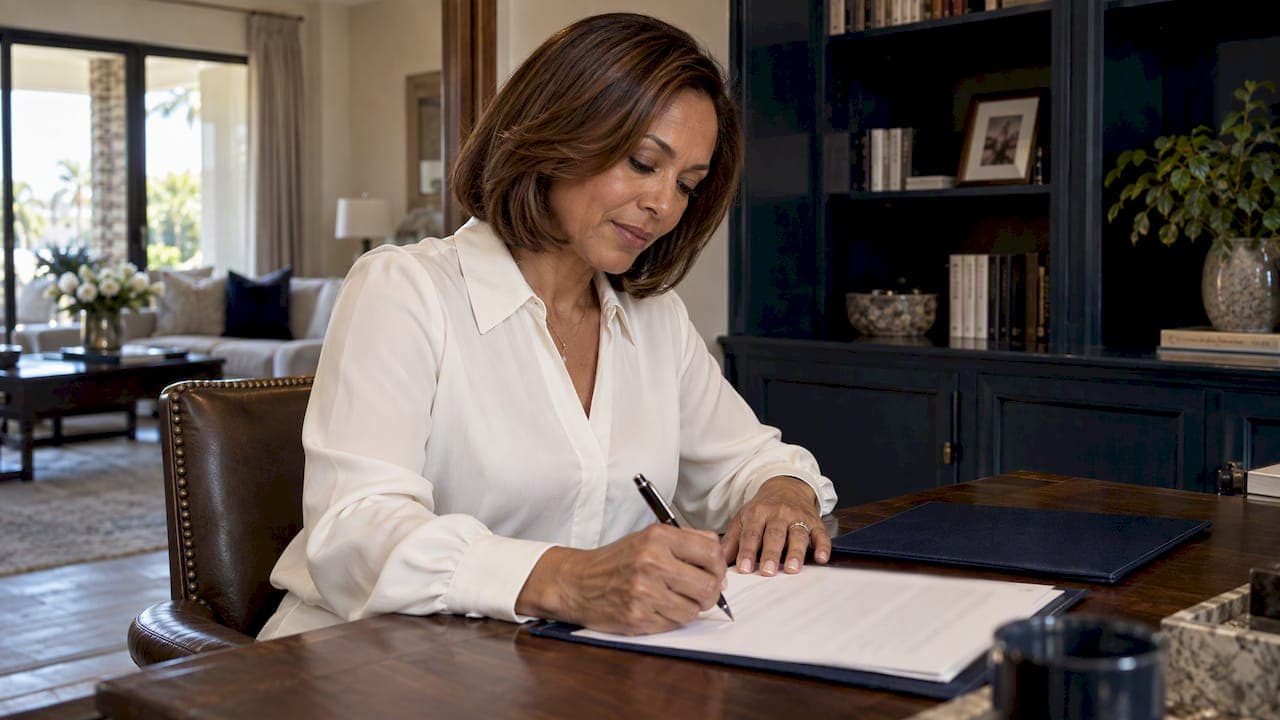
To hold title in trust in Nevada is to have a home vested in the trustee of a written trust rather than in an individual's personal name; the trustee holds legal title, while the trust's terms govern who benefits and who may act when the owner cannot. For a Las Vegas residence, the arrangement is typically achieved by a notarized deed recorded with the county, and it is chosen chiefly for continuity, privacy and probate planning rather than for any change in how the house is enjoyed.
TL;DR
- Legal title to trust property is held by the trustee, and Nevada law defines a trustee as the person holding property in trust.
- An existing home is moved into a trust by a signed, notarized deed that is recorded; a buyer can instead ask the title company to vest the new purchase in the trustee from the outset.
- A funded revocable trust can avoid probate for the home, but it does not by itself shield the property from the owner's creditors.
- Review the mortgage, homestead declaration and property tax consequences with a Nevada estate planning attorney before any transfer.
Table of Contents
- What it means to take title in trust
- Who holds legal title to a home owned by a trust
- Moving an existing home into a trust
- Buying a Las Vegas home directly in the trust
- Probate, privacy and the cost of an unfunded trust
- Mortgage, homestead and property tax questions
- Does trust title protect a home from creditors?
- Our perspective
- How we help buyers and sellers who hold property in trust
- Frequently asked questions
- Sources
What it means to take title in trust
Ownership of real property divides, in a trust, into two distinct functions. The trustee holds legal title and administers the asset; the beneficiaries enjoy its benefits. In a revocable living trust, the person who creates it, the settlor, commonly serves as the first trustee and the principal beneficiary, so that daily life in the house continues undisturbed. The change is felt chiefly at moments of transition: incapacity, death, sale or refinancing.
Nevada's statutes supply the vocabulary. NRS Chapter 163 defines a trustee as the person holding property in trust, and it requires that a trust relating to real property arise by operation of law or be evidenced by a written instrument signed by the trustee, or by the settlor conveying the trust property. The practical lesson is that the writing matters; an oral intention to hold a villa for one's children is no substitute for a signed instrument.
The courts have shown a measure of pragmatism. In In re Trust Agreement of Davies (2022), the Nevada Supreme Court clarified that no formal deed is strictly required to create a trust as to real property, provided the trust instrument is in writing and properly manifests intent, although recording a deed remains the standard means of keeping public title accurate. For a luxury residence, where lenders, insurers and title insurers expect a clean chain, recording is not optional in any practical sense.
Who holds legal title to a home owned by a trust
The trustee does. A trust is an arrangement rather than a person, so the deed should name the trustee, ordinarily in a form such as "Jane Doe, Trustee of the Doe Family Trust dated [date]." Guidance on retitling assets makes the same point: titled assets should be retitled in the trustee's name, not in the name of the trust itself.
Clark County practice is flexible on form. One Nevada probate firm notes that the county prefers deeds transferring property directly to the trust rather than to its trustees, though either form will probably work. Your attorney and title officer will settle the exact vesting language, and it should match the trust's name and date precisely.
The trustee's authority is considerable. Nevada law gives trustees broad powers to sell, encumber and manage real estate unless the trust instrument or other law limits them. That breadth is precisely what permits a successor trustee to list, sell or refinance a residence without a court proceeding, and it is also why the choice of successor trustee deserves as much care as the choice of a buyer.
Moving an existing home into a trust
For a home already owned in your own name, the sequence is brief but unforgiving of error.
The deed
A Nevada practitioner describes the usual route: the current owner signs and notarizes a deed, then records it so that county records reflect the trust's ownership. A deed that is signed but never recorded leaves the public record unchanged, and a deed prepared without attention to the legal description can create the very confusion the trust was meant to prevent.
Transfer tax and the certificate of trust
A transfer into your own trust is ordinarily a transfer without sale, and Nevada recognizes as much. The Clark County Recorder's published exemption list states that a transfer of title to or from a trust without consideration is exempt from real property transfer tax if a certificate of trust or the trust instrument is presented at recording. The same document sets the standard for the certificate: it must be signed by all currently acting trustees, bear notarized signatures, and state that the trust has not been revoked or amended in a way that makes a representation incorrect. Because recorder requirements are revised from time to time, confirm the current form with the Clark County Recorder or your attorney before you sign.
Privacy of the trust document
One point often misunderstood is what becomes public. The deed is a public record; the trust agreement is not made a matter of public record, and trust administration involves no clerk filings that enter the public file. A Clark County firm does report that the recorder asks for a scanned copy of the trust with certain deeds, which it describes as allegedly not a public document. A short certificate of trust, rather than the full agreement, is the customary way to disclose only what is necessary.
Buying a Las Vegas home directly in the trust
For buyers, particularly those relocating from California or New York, the cleaner course is often to avoid the retitling step altogether. One California estate planning commentary advises buyers to tell the realtor and title company at the outset that they wish to take title as trustee of their trust, and the same principle holds for a purchase in Henderson, Summerlin or along the Lake Las Vegas shoreline.
Timing is the discipline here. The purchase contract, the escrow instructions and the lender's documents should all identify the buyer consistently, and where a lender is involved, the loan may need to close in the buyer's personal name before the property is deeded to the trust afterward. Raise this at the offer stage, not at the closing table. In a competitive market, particularly for off-market residences that move quickly and privately, a buyer whose vesting questions are already answered is a buyer whose offer is easier to accept; our note on multiple offer strategies addresses that dynamic.
Can a California or New York trust own Nevada real estate?
Generally, a trust created elsewhere may hold Nevada property, provided it is validly established and the deed is properly drawn and recorded. Nevada statute also contemplates that a person not domiciled in the state may designate the laws governing a trust if the trust instrument properly does so. Even so, the law of the state where land sits generally controls matters such as property taxes and zoning. Have a Nevada-licensed attorney review a California or New York trust before closing, so that its trustee powers, certificate of trust and signature formalities satisfy a Nevada title insurer.
Many of our clients arrive with an existing trust and a settled estate plan, a pattern we describe in our overview of wealth migration to Nevada. Those making the move in stages will find the logistics outlined in our guide to planning a cross-country move.
Probate, privacy and the cost of an unfunded trust
The principal appeal of trust title is continuity. A revocable trust can avoid probate if the settlor's assets are conveyed to the trust before death. A properly prepared, signed, notarized, recorded and verified deed can help avoid probate for the Nevada property, and a successor trustee may then act under the trust's terms.
The converse is the hazard. Nevada authority indicates that property must be covered by a sufficient declaration that it is held in trust; otherwise it may still require probate. For owners with property in several states, the same Nevada practitioner warns that real estate left in an owner's own name in another state may lead to probate there. A trust that was signed with great ceremony and never funded with the Las Vegas deed is a common and costly oversight.
Investors who hold rental or second-home property alongside a primary residence should treat each parcel as its own funding question, and should coordinate any transfer with the lender; a primer on financing an investment property in Las Vegas outlines the loan products typically involved.

Mortgage, homestead and property tax questions
Three points deserve review before you record anything.

First, the mortgage. A transfer can implicate due-on-sale terms, and protection for certain residential transfers into an inter vivos trust is conditional, according to a Nevada trust and real estate analysis. Speak with your lender, in writing, before deeding an encumbered home.
Second, the homestead. Where an order setting apart a homestead is entered, a certified copy must be recorded with the recorder of the county where the property sits. Owners who filed a declaration in their own name and later retitle to a trust are right to ask whether a new filing is needed; the question is fact specific, and a Nevada attorney should answer it before the deed is recorded rather than after.
Third, property taxes. The same analysis advises that reassessment consequences be reviewed before a transfer. Nevada's abatement and assessment rules are technical, so confirm the treatment with the Clark County Assessor or your tax adviser.
Does trust title protect a home from creditors?
Not by itself. A trust can provide structure for asset protection, but it does not inherently shield real estate from all creditors or environmental claims, and the property remains subject to the laws of the state where it is located. More specifically, a Nevada attorney explains that an ordinary revocable living trust does not by itself protect the home from the settlor's creditors, whereas an irrevocable trust, properly structured and timed, may offer protection. Nevada's asset protection reputation attaches to specially designed irrevocable vehicles, not to the family revocable trust most households use for probate planning. If creditor exposure is your concern, consult an attorney who practices asset protection before you buy or retitle.
Our perspective
A luxury residence is rarely only a home; it is frequently the largest single asset in a family's estate, and the manner in which it is titled deserves the same deliberation as the manner in which it is selected.
We encourage every buyer who maintains a trust to raise the question at the very first conversation, long before an offer is drafted. The professional team, a Nevada estate planning attorney, a title officer and a lender, works best when it is assembled early, and an offer written with vesting, financing and timing already reconciled is one a seller takes seriously. Our negotiation approach is built on that kind of positioning.
For clients relocating from California or New York, our relocation concierge exists to coordinate precisely these moving parts, and the global network of Sotheby's International Realty, which stands behind our practice, extends the reach of both our buyers' searches and our sellers' marketing. We do not provide legal advice; we do ensure the people who do are in the room at the right moment.
Yelena
How we help buyers and sellers who hold property in trust
Whether you are acquiring a residence into a family trust or preparing a trust-owned estate for market, our team handles the real estate side with discretion: sourcing off-market homes, structuring offers around your vesting and financing needs, and coordinating with your attorney and title company through closing. Out-of-state clients can lean on our relocation concierge, and sellers benefit from luxury marketing with global syndication. Explore buyer and seller representation with Yhluxrealestate to begin a private conversation.

Trustees listing a trust-owned home should know that the closing will require evidence of authority, usually a certificate of trust, so gather it before the first showing. Our private showings protocol explains how we keep such sales discreet.
Frequently asked questions
Who holds legal title to trust assets?
The trustee holds legal title, and the beneficiaries hold the beneficial interest. Nevada law defines a trustee as the person holding property in trust. On a revocable trust, you are often the trustee and the beneficiary at once, so little changes day to day.
Is my California trust valid in Nevada?
Often it can hold Nevada real estate, but a Nevada attorney and the title company should review it first. Nevada law allows a non-domiciled person to designate governing law in the trust instrument, though Nevada law still controls matters like property taxes. Confirm trustee powers and signature formalities before closing.
Should I put my house in a revocable living trust?
Many owners do, mainly to avoid probate for that property and let a successor trustee act under the trust's terms. It does not by itself protect the home from your creditors. Check the mortgage, homestead and tax effects with your attorney first.
How do I transfer my Nevada home into a trust?
You usually sign and notarize a deed naming the trustee, then record it with the county. In Clark County, a certificate of trust meeting the recorder's requirements supports the transfer tax exemption for a transfer without consideration. Ask your attorney to prepare the deed and confirm the current forms.
Are trusts public record in Nevada?
The recorded deed is public, but the trust agreement itself is not made a matter of public record. A short certificate of trust lets you show authority without disclosing the trust's terms.
Sources
- NRS Chapter 163: Trusts
- NRS Chapter 163 (Nevada Legislative Counsel Bureau law library)
- NRS Chapter 155: Notices, Transfers, Orders, Procedure
- In re Trust Agreement of Davies (Nevada Supreme Court, 2022)
- Basic Estate Planning: Trusts (Ohio State University CFAES)
- Clark County Recorder: real property transfer tax exemptions
- Recording Real Estate in Nevada (Reed & Mansfield)
- Put Your House in Trust: Transferring Real Property Into a Trust in Nevada
- Nevada Revised Statutes 164.045
- Nevada Trusts and Real Estate: Situs, Liability, and Protection
- Where There's a (Pour-Over) Will, There's a Way (Nevada Lawyer, Nov. 2022)
- Estate Planning: Protect Privacy with a Revocable Trust
- Living Trust Creditor Protection in Nevada
- Investment Property in Las Vegas: Neighborhoods, Deal Math & Financing