
Location is the primary determinant of luxury home value, outweighing square footage, finishes, and architectural pedigree in every measurable market condition. A residence of identical specification placed in two different neighborhoods will command prices that diverge by a magnitude no renovation budget can close. For buyers and investors operating in competitive markets like Las Vegas, understanding why location drives luxury home value is not merely academic. It is the single most consequential insight that separates a sound acquisition from a costly miscalculation. Yhluxrealestate has built its practice on precisely this principle, guiding discerning buyers toward addresses where exclusivity, lifestyle, and long-term appreciation converge.
Which location factors most influence luxury home prices?
Location's influence on property price operates at two distinct levels: macro and micro. Macro factors are the broad, city-wide or district-wide attributes that establish a neighborhood's prestige and draw affluent demand.
Top-rated school districts add 15–25% to luxury home values compared to lower-rated districts. That premium persists even when buyers have no school-age children, because school district quality signals neighborhood stability and sustained demand. For Las Vegas buyers, school district proximity is a de rigueur consideration when evaluating addresses in Summerlin or Henderson.
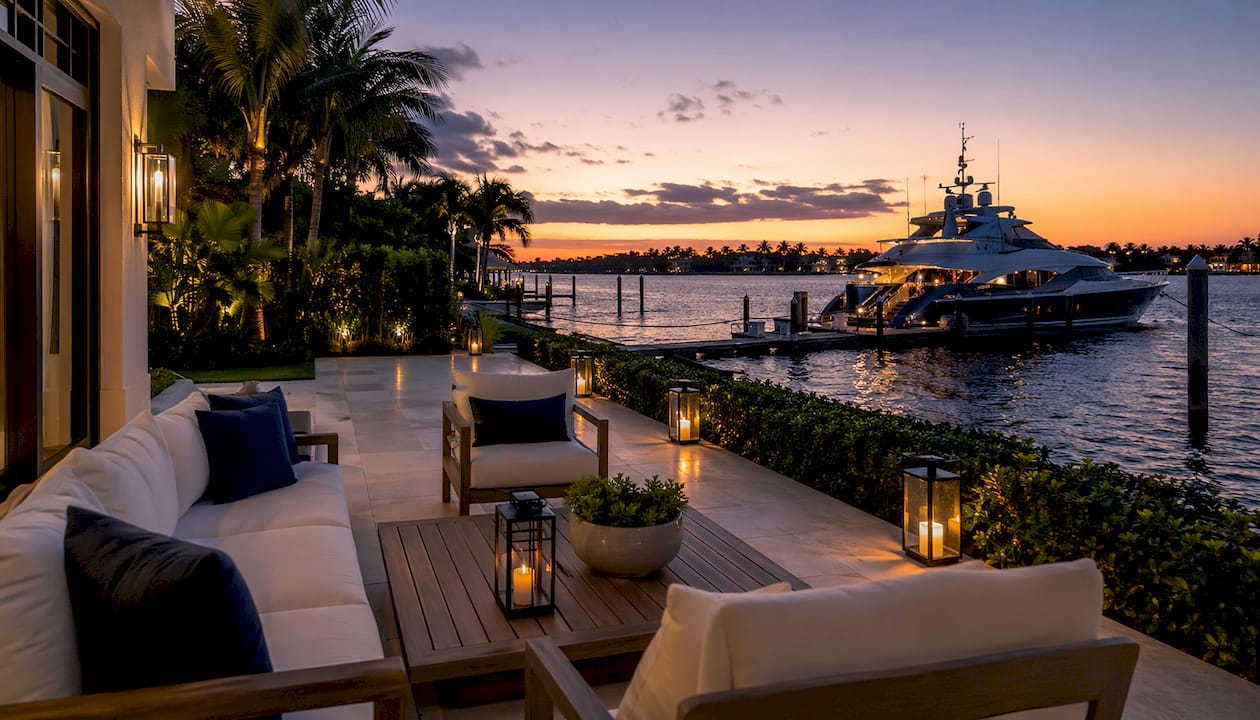
Waterfront luxury properties command a 74% price premium over comparable inland homes, driven by the absolute scarcity of coastline and lakefront positions. Scarcity is the engine of that premium. No developer can manufacture a new waterfront, which means supply is permanently capped and price floors are structurally protected.
Neighborhood infrastructure and prestige amplify value in ways that are equally durable. Proximity to elite amenities, including private clubs, fine dining corridors, and curated retail, creates a lifestyle density that affluent buyers pay to access. Reliable transport infrastructure and planned zoning protections further strengthen long-term appreciation by insulating a neighborhood from incompatible development. The macro location, in essence, sets the ceiling for what a property can ever be worth.
Pro Tip: When evaluating a luxury address, research the municipality's five-year infrastructure plan. Planned transit corridors, park expansions, and commercial rezoning are leading indicators of appreciation, not lagging ones.
How do micro-location details create price differences between similar homes?
Macro location establishes the neighborhood's value tier. Micro-location determines where within that tier a specific property sits, and the gap between the best and worst micro-positions is wider than most buyers expect.
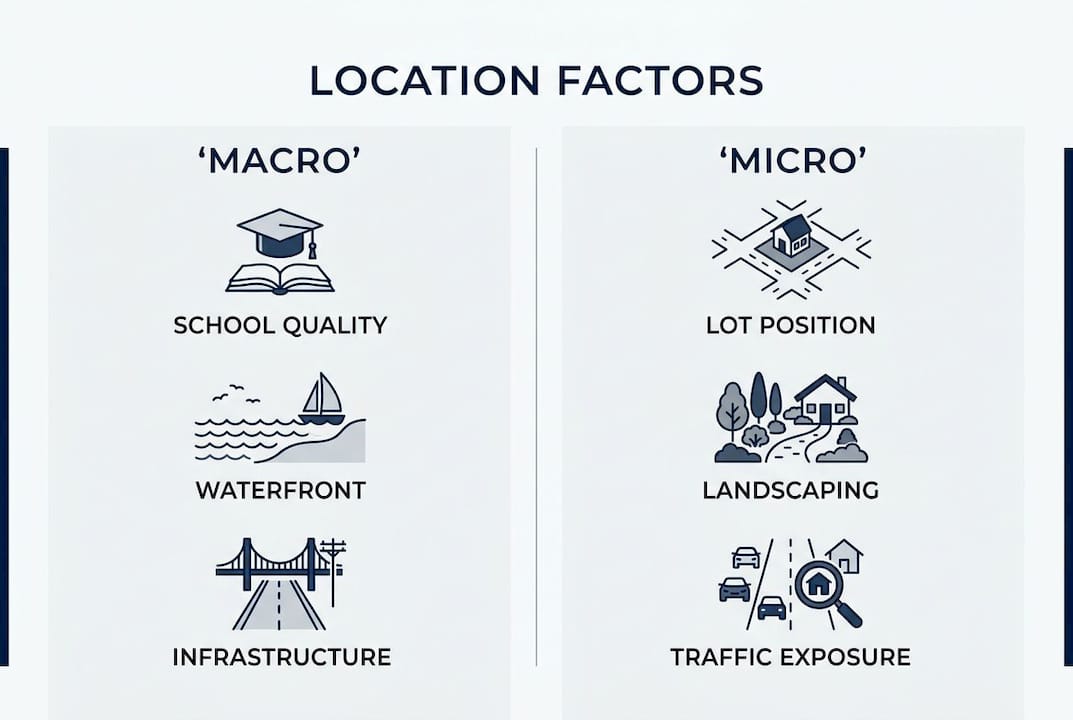
Identical homes on the same street can vary 8–15% in value based solely on lot position and traffic exposure. A residence set back from a collector road, oriented to capture mountain views, and shielded by mature tree lines occupies a fundamentally different market position than its neighbor two lots away facing a busy intersection. That variance is not cosmetic. It reflects the unreplicability of the better position.
Street orientation matters in ways that are specific to climate. In Las Vegas, a north-facing rear yard preserves usable outdoor space through the summer months, a feature that commands a genuine premium in the luxury segment. Corner lots offer expanded setbacks and reduced shared boundary exposure, which buyers translate directly into privacy value. Proximity to pocket parks or greenbelt corridors adds a further layer of desirability, as two otherwise identical properties can sell at meaningfully different prices when one backs to open space and the other does not.
Mature landscaping and established privacy measures increase luxury home premiums by 12–15% compared to newer, sparsely planted developments. A canopy of established trees and sculpted hedgerows cannot be replicated on a short timeline, which makes it a genuine scarcity asset within the lot itself. Buyers who overlook micro-location in favor of interior finishes often discover, at resale, that the market corrects their oversight without mercy.
Pro Tip: Walk the property at different times of day and on a weekend. Traffic patterns, ambient noise, and sun angles at 7:00 AM versus 5:00 PM reveal micro-location realities that no listing photograph will show.
Why do today's luxury buyers prioritize location over size or features?
The luxury buyer profile has shifted decisively. Size and opulence remain table stakes, but the defining purchase criterion for high-net-worth buyers in 2026 is the quality of the location's daily lived experience.
Affluent buyers now prioritize walkability, security, and proximity to elite amenities over raw square footage. This is the "location as luxury" paradigm, and it represents a structural shift in how the market assigns value. A 6,000-square-foot residence in a walkable, amenity-rich enclave will consistently outperform an 8,000-square-foot trophy property in an isolated suburban pocket.
"Luxury buyers purchase entry into social networks. The address itself functions as social currency, shaping desirability in ways that extend far beyond the physical attributes of the property." The psychology of luxury real estate confirms that community access and neighborhood identity are primary purchase motivators for high-net-worth individuals.
Convenience and frictionless living are equally powerful drivers. Sophisticated luxury buyers place a premium on time savings, proximity to private aviation, and access to concierge-level services within the immediate neighborhood. A location that eliminates friction from daily life commands a price premium that no interior upgrade can replicate.
The social dimension of location is particularly pronounced in Las Vegas submarkets like The Ridges in Summerlin or MacDonald Highlands in Henderson. Residency in these communities signals membership in a specific social and professional tier, a reality that luxury buyers evaluate with the same rigor they apply to financial due diligence.
How to apply location value insights when buying or investing in luxury homes
Translating location theory into a sound acquisition requires a structured approach. The following framework applies directly to buyers and investors evaluating luxury properties in Las Vegas and comparable markets.
-
Define your life vision before evaluating addresses. Successful luxury buyers define purchase priorities by their daily rhythms and long-term lifestyle goals, not by aesthetics. A buyer who values morning golf, private school access, and weekend dining within walking distance needs a fundamentally different address than one who prioritizes privacy, acreage, and mountain seclusion.
-
Evaluate permanent and unreplicable features first. Views, water access, lot orientation, and mature landscaping cannot be added after purchase. Interior finishes, technology systems, and even floor plans can be modified. The unreplicable attributes of a location are the ones that protect value through market cycles.
-
Assess future infrastructure and zoning. Neighborhood infrastructure growth and permanent zoning protections are the strongest predictors of long-term appreciation. In Las Vegas, the expansion of the Las Vegas Raiders' practice facilities, the growth of the medical corridor near Summerlin, and the continued development of the Las Vegas Strip's northern extension all create location value ripples that reach into adjacent residential submarkets.
-
Analyze supply constraints in your target submarket. High-net-worth investors achieve superior returns by securing assets in supply-constrained locations inaccessible to average buyers. Guard-gated communities with fixed lot counts, lakefront positions with no remaining buildable land, and hillside parcels with protected view corridors all exhibit this characteristic.
-
Engage a specialist with submarket depth. General market knowledge is insufficient in the luxury segment. Yhluxrealestate provides exclusive access to off-market properties and granular submarket analysis, giving buyers a positioning advantage that broad-market agents cannot offer.
Pro Tip: Request a micro-location analysis, not just a neighborhood comparable report, from your agent. Ask specifically about lot position, traffic patterns, and proximity to planned development before making an offer.
Key takeaways
Location is the single factor in luxury real estate that no renovation, redesign, or technology upgrade can replicate or replace.
| Point | Details |
|---|---|
| School districts add measurable value | Top-rated districts add 15–25% to luxury home prices, even for buyers without school-age children. |
| Waterfront scarcity protects price floors | Waterfront properties command a 74% premium because supply is permanently capped. |
| Micro-location creates 8–15% variance | Lot position, traffic exposure, and orientation cause significant price differences between identical homes. |
| Location is social currency | Affluent buyers pay for address prestige and community access, not square footage alone. |
| Unreplicable features hedge against downturns | Views, mature landscaping, and supply-constrained positions protect value through market cycles. |
What I've learned about location that most buyers discover too late
After years of working with buyers across Las Vegas's most coveted submarkets, I have watched the same pattern repeat with striking consistency. Buyers arrive focused on the home. They leave, sometimes years later, wishing they had focused on the address.
The most instructive cases I have seen involve two buyers purchasing comparable properties in the same general area at the same time. One chose a home with superior finishes in a submarket with no supply constraint and modest lifestyle amenities. The other accepted a slightly smaller floor plan in a guard-gated community with mountain views, a walkable club, and a fixed lot count. Five years later, the second buyer's appreciation was not merely better. It was in a different category entirely.
What the data confirms, and what I see in practice, is that micro-location details carry more weight than most buyers assign to them. The north-facing yard in Las Vegas is not a preference. It is a functional premium that translates directly into usable outdoor living months. The lot that backs to a greenbelt rather than a neighboring wall is not a minor aesthetic distinction. It is a privacy asset that the market prices accordingly.
My advice for buyers entering the Las Vegas luxury market in 2026 is to resist the pull of interior grandeur until the location case is closed. The finishes can be changed. The address cannot. Yhluxrealestate's approach to buyer representation begins with location analysis precisely because that is where the real value is built, and where the real risk is hidden.
— Yelena
Premier luxury listings in Las Vegas with Yhluxrealestate
Yhluxrealestate brings uncompromising depth to every location evaluation, drawing on Sotheby's International Realty's global network and Yelena Horton's intimate knowledge of Las Vegas's most coveted submarkets. For buyers relocating from out of state, the relocation concierge service translates complex submarket dynamics into clear, confident decisions.

Whether your priority is a guard-gated estate in Summerlin, a hillside retreat in MacDonald Highlands, or an off-market acquisition in one of Las Vegas's most supply-constrained enclaves, explore premier Las Vegas listings curated specifically for buyers who understand that address is the asset. Yhluxrealestate also offers insight into how luxury amenities affect resale value, ensuring every acquisition is evaluated for both lifestyle fit and long-term return.
FAQ
Why does location matter more than home size in luxury real estate?
Location determines exclusivity, lifestyle access, and long-term appreciation in ways that square footage cannot. Affluent buyers increasingly prioritize walkability, community prestige, and proximity to elite amenities over raw home size.
How much can location affect a luxury home's appraised value?
Macro factors like top school districts add 15–25% to appraised value, while waterfront positions command a 74% premium over inland equivalents. Micro-location differences in lot position and traffic exposure create an additional 8–15% variance between otherwise identical homes.
What micro-location features add the most value to a luxury home?
Lot orientation, mature landscaping, privacy from traffic, and proximity to parks or open space are the highest-impact micro-location features. These attributes are unreplicable after purchase, which makes them the most durable value drivers.
Are luxury homes in Las Vegas location-dependent?
Las Vegas luxury homes are highly location-dependent, with submarkets like The Ridges, MacDonald Highlands, and guard-gated Summerlin communities commanding significant premiums over comparable properties in less established areas. Supply constraints in these enclaves protect price floors through market cycles.
How should investors evaluate location when buying a luxury property?
Investors should prioritize supply-constrained positions, permanent and unreplicable features, and future infrastructure growth in their target submarket. Engaging a specialist like Yhluxrealestate, with granular knowledge of Las Vegas submarkets, provides a measurable advantage in identifying locations where appreciation potential is structurally protected.