
To win a bidding war or select the right buyer among competing offers, prioritize verified financing and clean, seller-aligned terms over small increments in price. Buyers who prevail typically pair a strong number with certainty; sellers who choose well compare net proceeds and closing risk, not just the top bid on paper.
TL;DR:
- Verified financing and proof of strong underwriting significantly increase a buyer’s chance of winning in competitive markets.
- Sellers prioritize net proceeds and certainty of closing over the highest offer, often valuing cash or fully underwritten deals more.
- Well-structured escalation clauses and clear appraisal-gap guarantees require specific caps and documentation to be effective and avoid liability.
- Early, thorough preparation by buyers, including full underwriting and understanding seller priorities, is essential for success in bidding wars.
- In deep bidding contests, certainty and clean terms tend to outweigh small price differences, making strategic offer structuring critical.
Table of Contents
- What Are the Best Multiple Offer Strategies for Buyers and Sellers?
- How Can Buyers Win a Bidding War Without Overpaying?
- How Should Sellers Compare Competing Offers?
- What Do Escalation Clauses and Appraisal-Gap Guarantees Actually Mean?
- How Do Top Agents Prepare Clients to Win?
- When Should You Push Hard and When Should You Hold Back?
- How Yhluxrealestate Positions Clients to Win
- Sources
- FAQ
What Are the Best Multiple Offer Strategies for Buyers and Sellers?
Multiple offer strategies work differently depending on which side of the table you occupy, but the underlying principle is the same: certainty beats bravado. A buyer's strongest weapon is not the highest number scrawled onto a contract. It is proof that the deal will actually close, on time, without drama. A seller's job is to see past the headline price and measure what each offer will genuinely put in their pocket after concessions, repairs, and the real odds of a smooth escrow.
This is where the phrase "non-contingent offer" enters the conversation. In plain terms, a non-contingent offer means the buyer has waived one or more standard protections, such as the right to back out over financing, appraisal, or inspection findings. It is a powerful lever in a hot market, but it is also where inexperienced buyers get hurt. The strongest multiple offer strategy is rarely the most aggressive one. It is the most credible one, built on verified numbers rather than optimism.
How Can Buyers Win a Bidding War Without Overpaying?
Winning a bidding war is less about drama and more about preparation that starts weeks before a showing. Elite buyer agents treat every competitive offer like a rehearsed presentation, not a last minute scramble, and that discipline is often what separates the winning bid from four losing ones.
Here is the sequence that tends to produce results without inviting regret:
- Get fully underwritten before you ever write an offer. A pre-approval letter is a starting point, but a fully underwritten loan, one where a lender has already cleared your income, assets, and credit rather than just running a quick estimate, sends a far stronger signal of certainty to a nervous seller.
- Decide between a single best offer and an escalation clause. In a market flooded with bidders, a clean, maximum price offer can actually beat a hesitant escalation clause. If you do use an escalation clause, state a firm dollar cap, a clear increment, and require the seller to show a competing offer before it triggers.
- Set earnest money at a level that signals seriousness. Typical earnest money deposits run 1% to 3% of the purchase price, but in fierce competition, buyers sometimes raise that figure, or offer a partial non-refundable deposit, to show they are not walking away lightly.
- Shorten your contingency windows instead of waiving them outright. A five-day inspection period instead of ten, or a pre-offer inspection paid out of pocket before you even submit, often reassures a seller more than a blanket waiver that leaves you exposed.
- Match your closing timeline and possession terms to what the seller actually needs. A flexible move-out date or a rent-back arrangement can matter more to a seller than an extra few thousand dollars.
Pro Tip: Ask your agent to call the listing agent before you write the offer. A two-minute conversation about what the seller cares most about, speed, price, or a simple close, can reshape your entire offer strategy.
Full underwriting and visible proof of funds measurably raise a buyer's perceived certainty in competitive markets, and that perception often decides which offer a seller picks when two bids land close together. Getting pre-approved and understanding what you can realistically afford before you compete also protects you from the kind of overbidding that turns a win into years of regret, according to Business Insider's bidding war guidance.
How Should Sellers Compare Competing Offers?
Sellers should rank offers by net proceeds and certainty of closing, not by the biggest number on the signature page. A $10,000 higher offer that leans on a shaky loan and a long appraisal contingency can easily net less, and cost more stress, than a slightly lower offer backed by verified cash or a fully underwritten mortgage.
Building a simple net-proceeds comparison for each offer clarifies the picture fast:
- Subtract any seller concessions, closing cost credits, or requested repairs from the headline price.
- Weigh financing strength: cash offers generally carry the least risk, underwritten loans with documented proof of funds rank next, and a bare pre-approval letter sits at the bottom of the certainty scale.
- Factor in the buyer's requested closing date against your own timeline needs.
- Note how many contingencies remain, since each one is a door the buyer can walk through later.
- Confirm proof of funds independently rather than taking a buyer's agent's word for it.
Sellers have four standard responses once offers are in hand: accept the strongest one outright, counter a single buyer, counter several buyers at once, or call for a round of highest-and-best submissions, according to National Association of Realtors guidance. Countering multiple buyers simultaneously can create leverage, but it also risks losing goodwill if buyers feel strung along, so most experienced listing agents prefer a clean highest-and-best call with a firm deadline over open-ended parallel counters.
Certainty of closing, cash, or clean underwritten financing, tends to outweigh a marginally higher price once a seller actually runs the numbers. When the top offer falls through inspection or financing, a backup offer with a kick-out clause lets the seller keep the deal moving instead of relisting from scratch, a mechanic Chase's home buying resources outline clearly for sellers weighing that option.
What Do Escalation Clauses and Appraisal-Gap Guarantees Actually Mean?
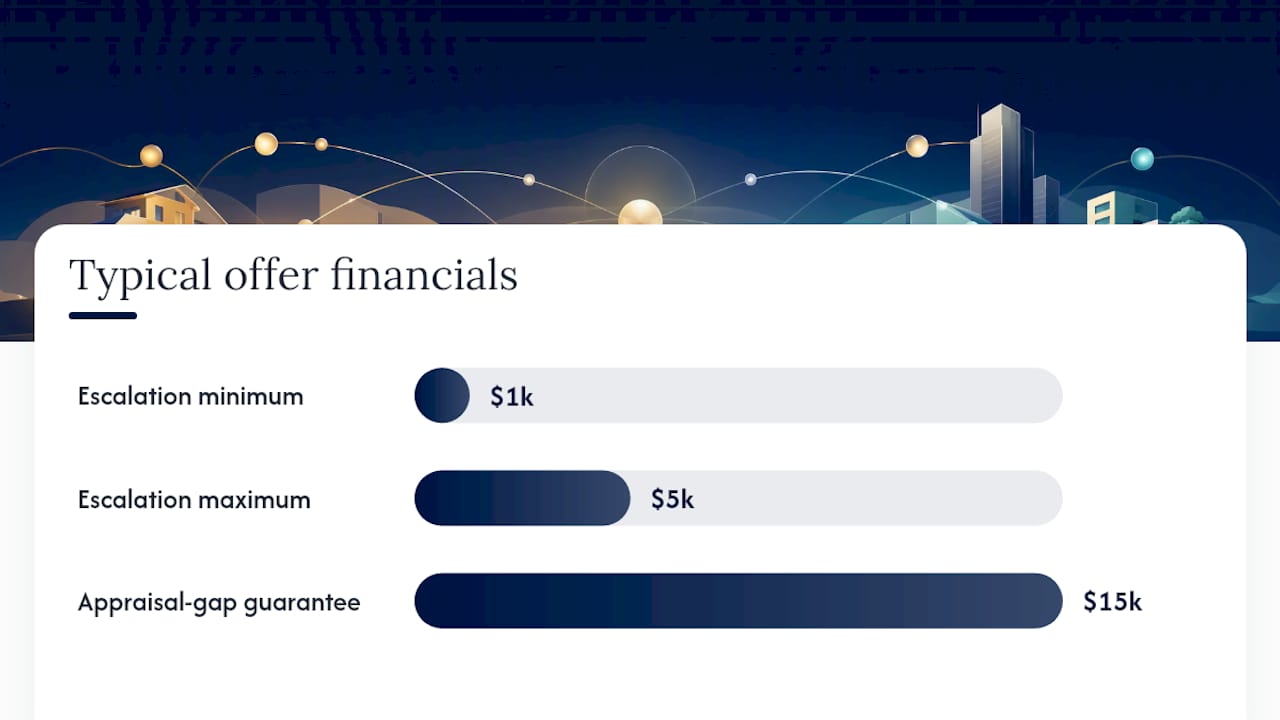
An escalation clause tells a seller: "I will beat any competing offer by a set amount, up to this ceiling." It sounds simple, but the mechanics matter enormously. A well-written clause specifies the increment (often $1,000 to $5,000 above the next highest bid), a hard cap, and a requirement that the seller's agent show documentation of the competing offer before the clause activates. Without that verification clause, buyers have no way to confirm the escalation actually reflects a real competing bid rather than a bluff.
An appraisal-gap guarantee addresses a different risk entirely: what happens if the home appraises below the contract price. A buyer who guarantees to cover a gap up to $15,000, for example, is promising to bring extra cash to closing if the lender's appraisal comes in short. Escalation clauses interact directly with appraisal risk, since a buyer who escalates aggressively without appraisal-gap language can end up contractually obligated to a price their lender will not finance.
- Specify a dollar cap and increment on any escalation clause, never leave it open-ended.
- Pair escalation with appraisal-gap coverage if you are pushing above recent comparable sales.
- Keep earnest money proportionate to your risk tolerance, since non-refundable deposits are only wise when you are certain about financing.
- Shorten rather than eliminate financing and inspection windows where possible.
- Document proof of funds and underwriting approval in the offer package itself, not as an afterthought.
Pro Tip: Vague appraisal-gap language creates liability. Specify the exact dollar cap and how the gap will be funded, cash reserves or a specific line of credit, rather than a general promise to "cover the difference."
Tactics like larger earnest money, tighter contingency windows, and appraisal-gap coverage genuinely strengthen an offer, but each one shifts real financial risk onto the buyer, a trade-off Rocket Mortgage's bidding war guidance is careful to spell out rather than gloss over.
How Do Top Agents Prepare Clients to Win?
Agents who consistently win competitive situations for their clients do the unglamorous work weeks before an offer is ever written: securing full underwriting, pulling comparable sales from the last 90 days, lining up pre-inspection resources, and rehearsing exactly how an offer package will be presented to the listing side.
- Secure full underwriting beyond simple pre-approval to ensure financing certainty when the seller compares offers.
- Utilize early access to some non-public inventory, allowing buyers to consider listings before public exposure and sellers to reach qualified buyers more efficiently.
- Employ services to assist out-of-state buyers in managing relocation logistics, facilitating smoother competitive offers.
- Focus negotiation strategies on client positioning, not just price, to align terms with what a specific seller actually values.
Before choosing representation, ask a prospective agent how they underwrite buyers, whether they have off-market inventory to show, and for a specific example of a negotiation they steered toward a favorable outcome.
When Should You Push Hard and When Should You Hold Back?
Market intensity should dictate your posture. In a thin field with one or two competing offers, price and a small concession often carry the day. In a deep field with a dozen bidders, certainty of financing and clean terms usually matter more than another few thousand dollars on the price line.
Never abandon a firm walkaway number. Set your maximum price and your risk boundary before you see the competition, not after. Repeat buyers and investors can often absorb more contract risk than a first-time buyer stretching to the edge of their budget, so the same aggressive tactic that makes sense for one may be reckless for the other.
— Yelena
How Yhluxrealestate Positions Clients to Win
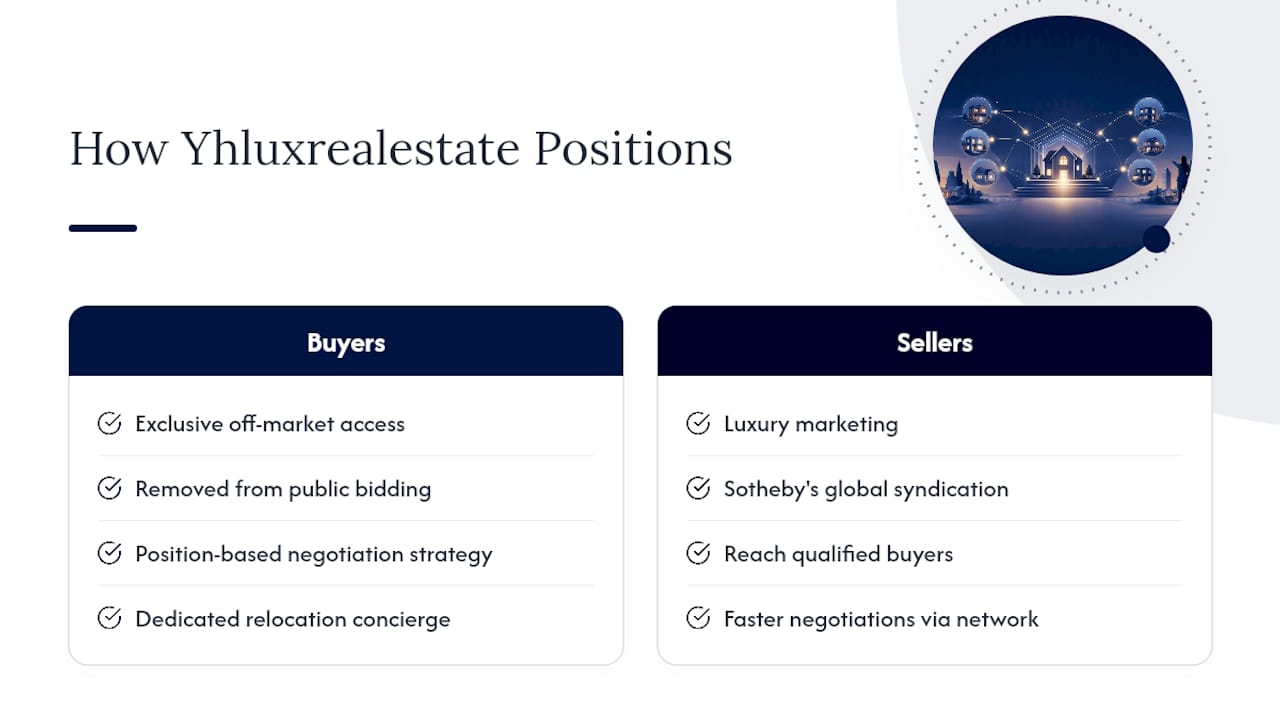
Winning a competitive offer situation in Las Vegas often comes down to what you see before everyone else does. Yhluxrealestate gives buyers exclusive access to off-market luxury properties that never reach public listings, removing you from the crowded bidding pools entirely rather than just arming you to fight harder within them.

For sellers, that same network works in reverse: luxury marketing with global syndication through Sotheby's International Realty connects a listing to serious, qualified buyers rather than a flood of lookers. Out-of-state buyers relocating for tax or lifestyle reasons get a dedicated relocation concierge to handle logistics while negotiations move fast. And every offer or counter is shaped by expert negotiation built around client positioning, not a generic script.
If you are heading into a competitive offer situation, whether writing a bid or reviewing a stack of them, reach out to Yhluxrealestate for an initial consultation. Come prepared with your financing status, your timeline flexibility, and your priorities, and walk out with a strategy built around your actual position, not a template.
This article is general information, not a substitute for advice from a qualified financial advisor. Consult a qualified financial professional about your own circumstances before acting on anything here.
Sources
- A Buyers' and Sellers' Guide to Multiple Offer Negotiations
- Multiple Offer Strategy: Winning in Competitive Buyer Markets - 2026 Guide
- How to bid on a house with multiple offers (Zillow)
- Multiple Offers: How Sellers Pick the Strongest Buyer
- 8 tips for winning a bidding war (Rocket Mortgage)
FAQ
What Is a Non Contingent Offer?
A non-contingent offer means the buyer has waived one or more standard protections, most often the inspection, appraisal, or financing contingency. It strengthens an offer's appeal to sellers but increases the buyer's financial risk if something goes wrong before closing.
How Do I Handle Multiple Offers as a Seller?
You have four standard options: accept the strongest offer, counter one buyer, counter several buyers at once, or call for highest-and-best submissions. Most experienced agents favor a clean highest-and-best call with a firm deadline to avoid the ill will that parallel counters can create.
Should I Waive the Inspection to Win a Bidding War?
Waiving inspection entirely is risky; shortening the timeline or paying for a pre-offer inspection often achieves a similar competitive edge with far less exposure. Buyers who waive inspection outright take on full responsibility for undiscovered defects after closing.
How Much Earnest Money Should I Offer?
Earnest money typically runs 1% to 3% of the purchase price, though buyers in fierce competition sometimes increase that amount or offer a partial non-refundable deposit to signal seriousness. The right figure depends on your risk tolerance and how confident you are in your financing.
Does Yhluxrealestate Help With Multiple Offer Situations?
Yhluxrealestate represents both buyers and sellers through multiple offer scenarios, using exclusive off-market access, a relocation concierge for out-of-state clients, and negotiation strategies built around client positioning. Pricing for these services is available directly through Yhluxrealestate.