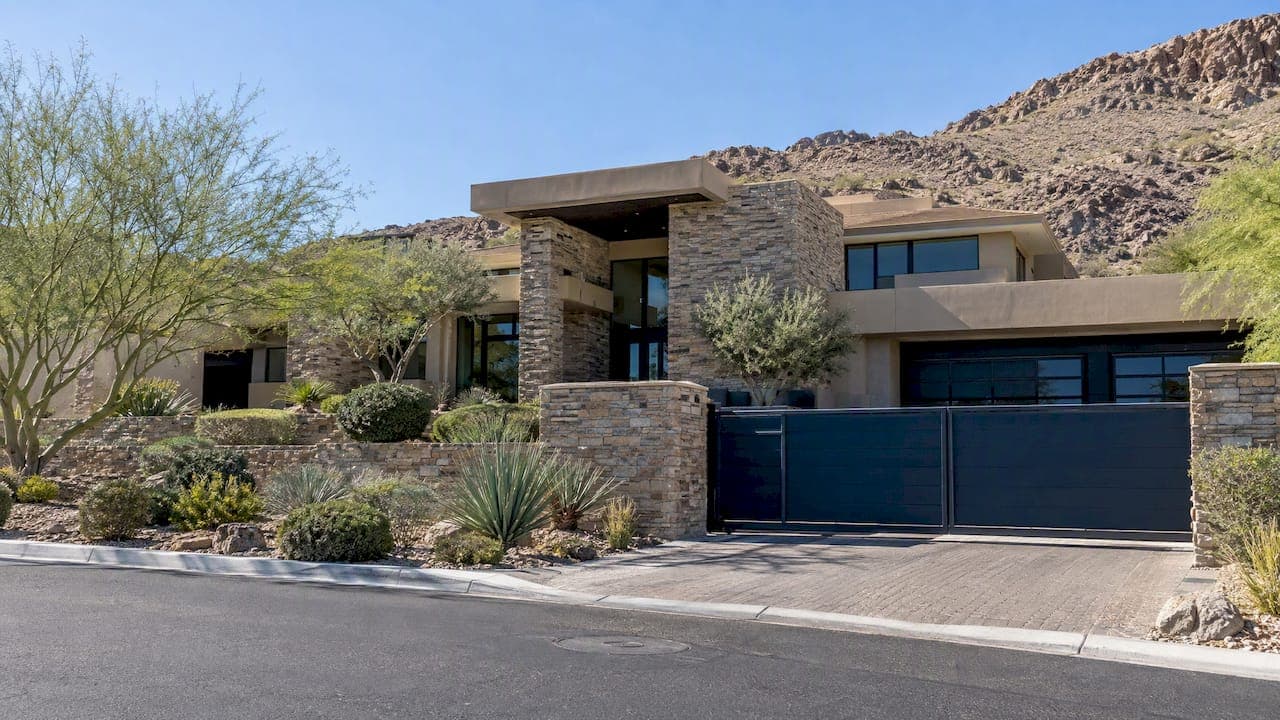
Luxury inventory in Las Vegas sits in a narrow and particular band right now: not scarce across the board, but concentrated in golf-community estates and select high-rise towers, with single-family luxury homes outnumbering move-in-ready condos. Prices for move-in luxury stock run from roughly $900,000 to over $20 million, and the sharpest competition centers on a handful of established enclaves. For buyers and investors, the real opportunity often sits outside the public listings entirely.
TL;DR:
- Ask prospective agents how many private listing showings they arranged in the past year, and prioritize specialists with relationships in your target community.
- A brokerage report counted 52 active MacDonald Highlands listings, averaging about $6.67 million, but that snapshot excludes private transactions.
- Golf estate buyers should expect firmer pricing and longer searches; condo buyers may find more resale movement or a temporary opening near scheduled deliveries.
- Bring preapproval or proof of funds to viewings; cash deals may close in two to three weeks, while financed purchases take 30 to 45 days.
Table of Contents
- A Snapshot of Active Luxury Listings
- Where Luxury Inventory Actually Surfaces
- What Recent Trends Mean for Your Search
- A Practical Timeline to Secure a Luxury Property
- How Local Access Changes a Buyer's Odds
- Price Per Square Foot Across Property Types
- Negotiation Tactics and Common Contingencies
- Who Shapes the Luxury Market
- Financing a Luxury Purchase in Las Vegas
- Investment Returns and Rental Yield Considerations
- Legal and Tax Considerations for Buyers
- What the Inventory Numbers Don't Tell You
- Ready to See What's Actually Available
- FAQ
- Sources
A Snapshot of Active Luxury Listings
The clearest public data point comes from MacDonald Highlands, the guard-gated golf community in Henderson that has become the bellwether for Las Vegas luxury inventory. A recent brokerage report counted 52 active listings there, with prices spanning $900,000 to $21 million and an average listing price near $6.67 million. That single community offers a useful proxy for the broader market: inventory exists, but it clusters tightly around specific neighborhoods rather than spreading evenly across the valley.
Beyond MacDonald Highlands, luxury stock breaks down into three recognizable categories:
- Single-family estates in guard-gated communities, typically the deepest and most consistent source of supply.
- Golf-community homes, where lot scarcity and course frontage keep turnover slow and prices firm.
- High-rise condominiums, where inventory has tightened noticeably as older towers sell through faster than new units come online.
Other neighborhoods worth tracking include Lake Las Vegas, The Ridges in Summerlin, and the Las Vegas Strip high-rise corridor, each with its own pace of listings and its own buyer profile.
Where Luxury Inventory Actually Surfaces
Public portals only tell part of the story. The MLS and consumer-facing listing sites capture homes that sellers have chosen to market broadly, but a meaningful share of luxury transactions in Las Vegas happen through channels that never reach a public search.
- Public MLS and portals show confirmed, actively marketed listings and give the clearest read on price per square foot and days on market.
- Brokerage-held exclusives, often called pocket or off-market listings, let sellers test pricing privately or protect their anonymity before (or instead of) going public.
- Developer release schedules govern high-rise presales, where units often move in phases tied to construction milestones rather than appearing all at once.
- Referral and concierge networks connect relocating buyers to inventory before it is formally announced, a pattern that mirrors how other Las Vegas luxury verticals operate.
That last pattern shows up clearly outside real estate too. Exotic car dealers such as Vegas Auto Gallery publish detailed, constantly updated stock listings so serious buyers can track real-time availability rather than waiting for word of mouth. Luxury residential inventory in Las Vegas behaves similarly: the sellers with the most leverage often prefer a quiet search over a public listing, and the buyers who see those homes first are usually working through an agent with existing relationships in that specific building or community.
Pro Tip: Ask any agent you're considering how many off-market showings they've arranged in the past year, not just how many homes they've sold publicly.
What Recent Trends Mean for Your Search
Several forces are shaping the inventory picture heading into 2026, and each one changes how a buyer should approach timing and leverage.
- Luxury high-rise condo supply has tightened as older towers sell through, while new deliveries follow their own construction calendars rather than filling gaps immediately.
- Relocation demand, particularly from buyers leaving higher-tax states, continues to support firm pricing on move-in-ready luxury homes.
- Investor interest in short-term and seasonal rental properties adds competition for well-located condos near the Strip and Lake Las Vegas.
- Golf-community lots remain tightly held, since many owners in communities like MacDonald Highlands are not under pressure to sell.
MacDonald Highlands alone currently lists 52 active properties priced from $900,000 to $21 million, illustrating how much of the visible luxury market concentrates in a single, well-established enclave.
For buyers, this means negotiation leverage varies sharply by micro-market. A buyer targeting a golf-course estate in a low-turnover community should expect firmer pricing and longer searches, while a buyer open to high-rise condos may find more movement as towers cycle through resale inventory. Timing a purchase around a scheduled high-rise delivery can also open a temporary window of expanded supply.
A Practical Timeline to Secure a Luxury Property
Moving from research to closing on a luxury Las Vegas property typically follows a predictable sequence, though the pace depends heavily on how much of the search happens off-market.
- Define criteria and shortlist communities, factoring in lifestyle priorities, investment goals, and whether a golf community, waterfront lot, or high-rise fits best.
- Secure private viewings, including off-market and pocket listings that never appear on public portals.
- Complete due diligence, covering inspections, HOA documents, title review, and, for investment purchases, a rental income analysis.
- Submit an offer with clear contingencies, then negotiate price, closing timeline, and any repair or credit terms.
- Close escrow, typically 30 to 45 days after an accepted offer for cash buyers, longer when financing is involved.
Budget considerations extend beyond the purchase price. Expect agent representation (customary in luxury transactions), HOA or association dues that can run substantial in gated golf communities, ongoing carrying costs, and standard closing costs that in Nevada typically include title insurance, escrow fees, and recording charges split between buyer and seller by local custom.
Pro Tip: Line up financing pre-approval and proof-of-funds documentation before you start viewings. Exclusive and off-market sellers often prioritize buyers who can move quickly over those still assembling paperwork.
Buyers relocating from out of state should also plan logistics early. Our guide to planning a cross-country move into a luxury home covers the details that often get overlooked until the final weeks before closing.
How Local Access Changes a Buyer's Odds
Finding the right luxury property in Las Vegas is rarely just a matter of browsing listings. We built our practice around the parts of the market that never reach a public search, which is where many of the best opportunities for serious buyers actually live.
- Off-market access lets buyers see homes before they're broadly marketed, often avoiding competitive bidding entirely.
- Negotiation strategy focused on client positioning helps buyers secure favorable terms even in tight micro-markets like MacDonald Highlands.
- Relocation concierge support smooths the logistics for out-of-state buyers managing a move alongside a purchase.
- Global network access, backed by Sotheby's International Realty, extends reach to buyers and referral sources well beyond the Las Vegas valley.
For buyers weighing a waterfront purchase, our Lake Las Vegas market overview breaks down how that micro-market behaves differently from golf-community or high-rise inventory. And for anyone navigating a competitive offer situation, our piece on multiple offer strategies lays out the tactics that matter most when a desirable property draws several bids at once.
Price Per Square Foot Across Property Types
Price per square foot varies meaningfully by property type in the Las Vegas luxury segment, and that gap tells buyers a lot about where the premium actually sits. Golf-community estates in enclaves like MacDonald Highlands often command the highest per-square-foot pricing, driven by lot scarcity, course frontage, and the guard-gated setting; the reported $6.67 million average listing price there, spread across homes in the $900,000 to $21 million range, reflects how much of that value is tied to the specific lot rather than square footage alone.
High-rise condominiums on or near the Strip typically price per square foot based on floor level, view corridor, and finish quality rather than total unit size, which means two units of similar square footage in the same building can carry very different price tags. Waterfront properties in communities like Lake Las Vegas add another variable: direct water frontage carries a distinct premium over interior lots within the same community.

For buyers comparing property types, the practical takeaway is that price per square foot is not a reliable way to compare across categories. A golf-course estate and a high-rise condo may land in the same total price bracket while reflecting entirely different value drivers, so comparisons work best within a single property type and neighborhood rather than across the market as a whole.
Negotiation Tactics and Common Contingencies
Luxury negotiations in Las Vegas tend to move slower and involve more customized terms than typical residential deals. Inspection contingencies remain standard, but luxury buyers often negotiate extended inspection periods to accommodate specialty assessments, pool and spa systems, home automation, or detailed HOA document review in gated communities.
Financing contingencies are frequently shortened or waived entirely when buyers come with cash or have financing pre-arranged, which strengthens an offer considerably in competitive situations. Appraisal contingencies can become a sticking point on unique properties, since luxury homes with custom features sometimes appraise below the negotiated price, requiring either a price adjustment or additional buyer funds at closing.
Earnest money deposits in luxury transactions typically run higher than standard deals, signaling serious intent to sellers who may be fielding multiple inquiries on a pocket listing. Closing timeline flexibility is another common lever: sellers in no rush to move may favor a buyer willing to accommodate a longer closing, while a seller facing a tight timeline may accept a lower offer in exchange for a fast, clean close.
Our breakdown of multiple offer strategies covers how these levers play out when more than one buyer is competing for the same property, which happens more often in tightly held communities like MacDonald Highlands than public inventory counts might suggest.
Who Shapes the Luxury Market
Las Vegas luxury real estate runs through a small set of brokerages and agents with deep community-level relationships, particularly in guard-gated enclaves where much of the inventory never reaches public portals. Global-network affiliations matter here: a brokerage connected to an international referral system, such as Sotheby's International Realty, can surface buyers and sellers who are not yet visible in the local market, which is a meaningful advantage in a segment where discretion is often the seller's top priority.
Local expertise matters just as much as network reach. Agents who work specific communities like MacDonald Highlands, Lake Las Vegas, or the high-rise Strip corridor on an ongoing basis tend to know which homeowners are quietly considering a sale long before a listing appears. That kind of relationship-driven access is difficult to replicate through a generalist approach, and it is the main reason serious buyers tend to work with a specialist rather than a broad residential agent.
We built our own practice around exactly that kind of specialization, combining off-market access with negotiation strategy designed around client positioning rather than a one-size-fits-all approach. For buyers weighing a search in a different luxury market, perspectives like the Santa Cruz luxury market guide from Desantis Realty offer a useful point of comparison on how seller strategy and local market signals interact in another high-demand U.S. region.
Financing a Luxury Purchase in Las Vegas
Financing luxury real estate rarely follows the standard conforming-loan path. Most purchases above the high-end of conventional loan limits require a jumbo mortgage, which typically carries stricter underwriting, larger down payment requirements, and more documentation than a standard loan.
Cash purchases are common in the upper tiers of the Las Vegas luxury market, particularly among relocating buyers and investors who want to close quickly and strengthen their negotiating position. For buyers who do finance, portfolio loans through private banks can offer more flexible underwriting than a conventional jumbo product, especially for borrowers with complex income structures or significant assets held outside traditional retirement accounts.
Out-of-state and international buyers face additional considerations. Foreign nationals, in particular, often need specialized loan products designed around the absence of a U.S. credit history. Our guide to foreign national mortgage options walks through how those products work and what documentation lenders typically require.
Whatever the financing path, pre-approval or proof-of-funds documentation matters more in luxury transactions than in standard home sales. Sellers fielding private, off-market interest tend to prioritize buyers who can demonstrate financial readiness immediately, since a drawn-out financing process can cost a buyer the opportunity entirely in a tightly held community.
Investment Returns and Rental Yield Considerations
Luxury properties in Las Vegas appeal to investors for different reasons than entry-level rental units, and the return profile reflects that difference. Short-term and seasonal rental demand near the Strip and at waterfront communities like Lake Las Vegas can generate meaningful income during peak convention and event seasons, though returns fluctuate with occupancy patterns tied to the broader tourism and events calendar.
Appreciation, rather than rental yield alone, tends to drive the investment case for high-end golf-community estates, where limited lot availability in communities like MacDonald Highlands supports long-term price stability even when rental demand is modest. Investors focused purely on cash flow often find better yield in mid-tier rental properties, while luxury acquisitions function more as a store of value paired with lifestyle use.
HOA fees, property management costs, and Nevada's lack of a state income tax all factor into the net return calculation. The absence of state income tax is frequently cited by relocating investors as a meaningful advantage over higher-tax states, though property taxes and insurance costs still need to be weighed against any rental income projections before committing to a purchase.

Buyers evaluating a purchase purely as an investment should treat rental income as a secondary benefit to appreciation potential in the highest tiers of the market, and model returns conservatively given how much seasonal rental income can swing year to year.
Legal and Tax Considerations for Buyers
Nevada's lack of a state income tax is one of the most frequently cited reasons relocating buyers target Las Vegas, and it applies to capital gains on investment property as well as ordinary income. That said, federal capital gains tax still applies on the sale of investment property, and buyers should plan for that liability separately from any Nevada-specific advantage.
Property tax rates in Clark County are assessed based on a percentage of the home's taxable value, and luxury buyers should confirm the current assessed value and any applicable exemptions with the Clark County Assessor's office before finalizing a purchase, since assessed values can differ meaningfully from purchase price.
HOA governance in gated communities like MacDonald Highlands often includes architectural review requirements and resale restrictions that buyers should review carefully during due diligence, particularly for buyers planning renovations or rentals. International and out-of-state buyers should also consult a tax professional about structuring the purchase, since ownership entity choice can affect both estate planning and tax treatment.
None of this replaces individualized legal or tax advice. Every luxury purchase carries its own set of considerations, and the right structure depends on a buyer's residency status, investment goals, and broader financial picture, which is best worked through with a qualified attorney or tax advisor alongside the real estate transaction itself.
What the Inventory Numbers Don't Tell You
The public data paints a picture of modest, concentrated supply, but the real story is how much of the Las Vegas luxury market operates outside that data entirely. A 52-listing snapshot in one community, however useful, understates how many conversations are happening privately between sellers who aren't ready to list and agents who already know what they're looking for.
The conventional advice, watch the MLS and wait for new listings, misses the fact that the most desirable properties in communities like MacDonald Highlands often change hands before they ever reach a public portal. Buyers who rely solely on public search tools are effectively competing for the leftovers.
What we'd prioritize differently: spend less time refreshing listing sites and more time building a relationship with an agent who has standing access to the quiet conversations happening inside the communities you actually want. Inventory numbers answer the question of what's visible. They don't answer the question of what's actually available to a serious buyer willing to move.
— Yelena
Ready to See What's Actually Available
We work mainly in segments of the Las Vegas market that public listings rarely capture, which means the first conversation we have with a buyer often involves homes not yet on public portals.

For buyers ready to move past the public inventory count, we offer a few specific paths forward:
- Off-market access and buyer representation, matching your criteria against listings before they're broadly marketed.
- Relocation Concierge support for out-of-state buyers managing a move alongside a purchase.
- Negotiation and investment guidance, drawing on Sotheby's International Realty's global network and positioning strategy built around your goals.
A first consultation covers your criteria, timeline, and financing position, then outlines which off-market and public opportunities fit. Start that conversation through Yhluxrealestate.
FAQ
What luxury brands are in Vegas?
Las Vegas hosts a concentrated cluster of luxury retail around The Shops at Crystals, Wynn, The Palazzo, and The Venetian, where high-end jewelers and designer boutiques operate alongside major resort properties. That retail concentration often mirrors where high-net-worth residential demand clusters as well.
What states have the highest housing inventory?
Housing inventory levels vary significantly by state and shift with local market conditions, so there is no single fixed ranking that applies across the country. For luxury buyers specifically, Nevada's inventory patterns are shaped more by community-level supply, as seen in enclaves like MacDonald Highlands, than by statewide totals.
Where do the ultra rich stay in Vegas?
High-net-worth visitors and buyers tend to gravitate toward guard-gated golf communities like MacDonald Highlands, waterfront enclaves like Lake Las Vegas, and high-rise towers along the Strip corridor. These areas combine privacy, amenities, and proximity to luxury retail and resort dining.
Is there a luxury outlet in Las Vegas?
Las Vegas has several retail destinations that carry designer and luxury goods, including boutiques at major Strip resorts and specialty dealers such as Luxe Vegas for watches and handbags. These are distinct from the city's luxury residential market, though both reflect the same concentration of high-end demand.
How quickly can a buyer close on a luxury home in Las Vegas?
A straightforward cash purchase can close in as little as two to three weeks, while financed luxury purchases typically take 30 to 45 days to account for jumbo loan underwriting. Off-market deals can sometimes move faster since they skip the public marketing period entirely.
Sources
- Las Vegas Homes By Leslie – RE/MAX United Realtor Reports 52 Active Listings in MacDonald Highlands Golf Course Community
- Pre-Owned Inventory | Las Vegas’ Largest Exotic & Luxury Dealer | Vegas Auto Gallery