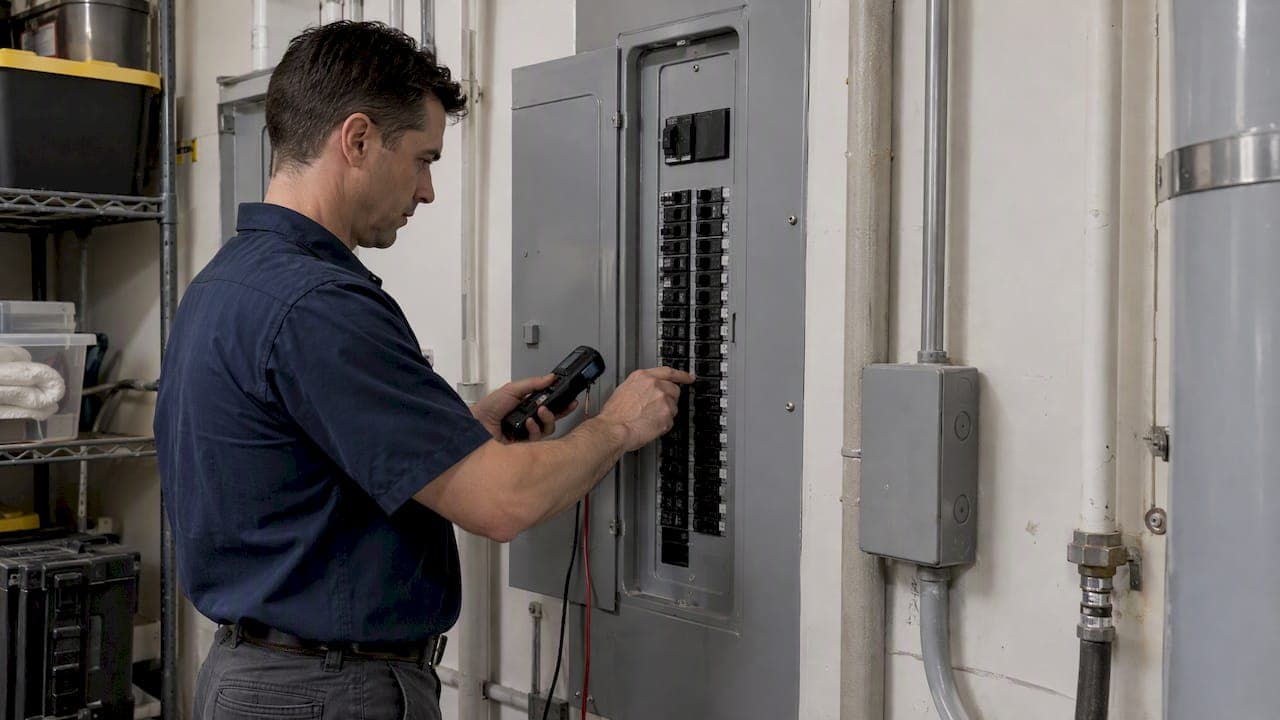
A luxury home inspection differs from a standard one in scope rather than in principle: the same fundamentals of structure, roof, plumbing, electrical and climate control apply, but they are multiplied across larger footprints, more sophisticated systems and amenities that a conventional inspector may not be qualified to judge. This checklist walks through what to examine, which specialists to bring, and how to read the findings in the context of a Las Vegas estate, where desert sun, extreme heat and resort-style outdoor living place unusual demands on a property.
TL;DR
- Begin with a licensed general inspector working to a recognized standard, then add specialists for the pool, roof, HVAC, low-voltage and smart-home systems, and any waterfront or hillside features.
- Schedule the inspection as soon as your offer is accepted; the Consumer Financial Protection Bureau advises leaving ample time to resolve problems.
- Read Nevada's Seller's Real Property Disclosure Form first, and let it direct the inspector's attention.
- In a luxury home, the costly surprises tend to hide in mechanical systems, outdoor amenities and past renovations rather than in cosmetics.
- Use the report as a negotiating instrument, not merely a verdict on whether to proceed.
Table of Contents
- Why a Luxury Home Deserves a Longer Inspection
- Choosing the Right Inspector, and Adding Specialists
- The Exterior and Grounds
- Roof, Attic and Insulation
- Plumbing and Water Systems
- Electrical, Lighting and Smart-Home Systems
- Heating, Cooling and Air Quality
- Interior Finishes, Custom Features and Hidden Defects
- Location Factors an Inspector Will Not Measure
- Nevada Disclosure: Reading the Seller's Form Before the Inspector Arrives
- Our Perspective: The Inspection as Strategy
- How We Support Buyers Through Inspection and Beyond
- A Practical Sequence for Inspection Week
- FAQ
- Sources
Why a Luxury Home Deserves a Longer Inspection
A residence of 6,000 square feet or more may contain multiple HVAC zones, several water heaters or a recirculating loop, a dedicated electrical sub-panel for the outdoor kitchen, and a pool with its own equipment pad. Each additional system is another point of potential failure, and the cost of correcting a failure scales with the quality of the original finishes. A cracked slab beneath imported stone, or a leak behind a custom millwork wall, is a different order of repair from its counterpart in a tract house.
The standard most inspectors follow gives a useful skeleton. The American Society of Home Inspectors' 2026 Standard of Practice organizes the inspection into structure, exterior, deck and balcony, roofing, plumbing, electrical, heating, ventilation and air conditioning, interior, and insulation. That framework is where a luxury checklist begins; it is not where it ends. Many of the amenities that define a high-end property fall outside a general inspection and require their own evaluation.
Expect a longer appointment as well. Where a modest home may take two or three hours, a large estate can occupy a full day or more, and it is reasonable to ask the inspector in advance how long the visit will take and whether a second professional will accompany them.
Choosing the Right Inspector, and Adding Specialists
The CFPB's guidance is to choose an inspector with a reputation for being honest and thorough, and to arrange the visit independently, rather than relying on someone with a stake in the transaction. For a luxury property, add three questions: whether the inspector has experience with homes of this size and age, whether the written report includes photographs and repair priorities, and which of the home's features fall outside the scope and need a specialist.
In practice, a Las Vegas estate often calls for the following additional professionals, each engaged during the due diligence period:
Pool and spa technician
The pool is frequently the single most expensive amenity to restore. A specialist can assess the shell, plaster, tile line, pumps, heaters, automation, salt cell or chlorination equipment, and the safety barrier. Ask also about the running costs; our guide to pool maintenance costs in Las Vegas sets out what an owner should anticipate beyond the purchase price.
Roofing specialist
Tile, flat membrane and standing-seam metal roofs each fail differently under sustained sun. A roofer can examine underlayment, flashing, penetrations and drainage in a way a generalist walking the surface cannot always replicate.
HVAC technician
Multi-zone systems, variable-speed compressors and zoning dampers deserve a mechanical evaluation, including age, refrigerant type, duct integrity and whether each zone actually cools its rooms. In a desert summer, this is not a luxury but a necessity.
Low-voltage and smart-home integrator
Lighting control, security cameras, motorized shades, whole-home audio and networking are rarely within a general inspector's scope. Ask who installed the system, whether the owner holds the administrator credentials, and whether the equipment transfers with the sale.
Structural or geotechnical engineer
For hillside lots, large cantilevers, basements, or any home showing cracks in stucco, slab or interior walls, an engineer's opinion provides certainty that a visual inspection cannot.
The Exterior and Grounds
Begin outside, where the desert does its quiet work. Walk the perimeter and observe the following, ideally with the inspector, so you can ask questions as findings emerge.
The foundation and stucco deserve close attention for hairline versus stepped cracks, since the former is common and the latter may signal movement. Inspect the grading around the home, confirming that water is directed away from the walls, and look at the condition of expansion joints in driveways and patios. Courtyards, motor courts and gated entries should be examined for drainage as well as surface quality, because Las Vegas storms are infrequent but sudden.
Inspect windows and sliding glass walls for seal failure, fogging between panes, and tracks that no longer glide cleanly; oversized glazing is both a hallmark of luxury design and an expensive item to replace. Check exterior lighting and controls too. If the property has architectural roofline lighting, ask whether it is a permanent installed system, who maintains it, and what the warranty covers; this permanent lights checklist offers a useful frame for evaluating such an installation.
Finally, assess outdoor living spaces: the built-in barbecue, fire features, gas lines and shade structures. Gas lines should be pressure-tested by a qualified professional, and any fire feature should be confirmed as permitted and properly vented.
Roof, Attic and Insulation
The roof is the home's first line of defense against ultraviolet exposure, and its condition determines how long the interior finishes will remain unspoiled. Ask for the roof's age, any warranty paperwork, and records of past repairs. In the attic, look for evidence of leaks, compressed or displaced insulation, rodent intrusion, and ductwork that is disconnected or poorly sealed. Attic temperatures in summer place enormous stress on mechanical components, so equipment located there merits a careful look.
Plumbing and Water Systems
In a large home, plumbing is a network rather than a few fixtures. Your inspector should test water pressure, run every tap and shower, flush every toilet, and examine visible supply and drain lines for corrosion, previous repairs and material type. Ask the following questions of the seller through your agent:
Where are the main shutoff valve and any leak-detection or automatic shutoff devices? How many water heaters serve the home, and how old are they? Is there a water-softening or filtration system, and who services it? Has the property experienced any leaks, and was the repair documented and permitted?
Pay particular attention to primary suites with freestanding tubs, steam showers and multiple body sprays, because concealed leaks in tiled enclosures can be costly. A moisture meter or thermal imaging camera, used by a competent inspector, can reveal what the eye cannot.

Electrical, Lighting and Smart-Home Systems
The main panel should be inspected for brand, capacity, labeling, double-tapped breakers and signs of overheating. A home of this scale may carry 400-amp service or multiple panels, and any recent additions, such as an outdoor kitchen, an EV charger, a guest house or a theater, should be matched against the panel's capacity and against permits. Test outlets for correct wiring and ground-fault protection in wet areas, and confirm that smoke and carbon monoxide alarms function.
Beyond the basics, evaluate the backup power arrangement: a whole-home generator, battery storage or solar array each introduces maintenance obligations and, in the case of solar, possible lease or loan agreements that may or may not transfer to a buyer. Request the documents early.
Heating, Cooling and Air Quality
Request the service history for every unit, the model and serial numbers, and the installation dates. A knowledgeable technician will measure temperature differentials, check condensate drains and inspect the condition of coils and filters. In a long desert summer, a system near the end of its service life is a negotiating point of real weight, not a minor footnote.
Air quality merits a mention as well. The Environmental Protection Agency recommends that buyers know the indoor radon level of any home they consider purchasing, and suggests asking the seller for test results and for details of any mitigation system. Radon is a regional question, so consult a certified tester about whether a test is advisable for your particular address.
Interior Finishes, Custom Features and Hidden Defects
Inside, a luxury home hides its defects in beauty. Look past the staging and examine ceilings and wall bases for staining, floors for hollow-sounding tile or buckling wood, and cabinetry for water damage below sinks and around dishwashers. Operate every door, window, elevator, dumbwaiter and motorized feature. Test the appliances: professional-grade ranges, wine storage, built-in coffee systems and refrigeration columns carry significant replacement costs, and warranty status should be confirmed.
Where a home has been renovated, ask for permits and the contractor's details. Unpermitted work is among the most common sources of post-closing disputes, and a seemingly handsome remodel may conceal modifications that were never inspected. If you are weighing a custom build instead of an existing estate, our overview of design-build in Las Vegas explains how that route differs.
Location Factors an Inspector Will Not Measure
Some of the most consequential characteristics of a property lie outside its walls. Flight paths, for example, can affect the enjoyment of a terrace or a primary suite, and we have prepared an airport noise map guide for Las Vegas for exactly this purpose. Waterfront homes carry their own considerations, from dock condition to association rules, discussed in our guide to Lake Las Vegas waterfront living. Visit at different hours, including a weekday afternoon and a weekend evening, before you commit.
Nevada Disclosure: Reading the Seller's Form Before the Inspector Arrives
Nevada law places a duty on sellers that works hand in hand with your inspection. According to a summary of NRS Chapter 113, sellers of residential property must complete and deliver the official Seller's Real Property Disclosure Form, and buyers cannot waive that requirement. The same summary notes that sellers must complete the form themselves, and that a buyer who does not receive a properly completed form may be able to terminate the agreement. A 2021 Nevada statute confirms that a seller's agent shall not complete the disclosure form on the seller's behalf. The governing text is found in NRS Chapter 113, and the specifics of timing and remedies are best confirmed with a Nevada real estate attorney for your own transaction.
Use the form as a map. Every item the seller marks as a known issue, whether a past roof repair, a drainage concern or an addition, becomes a line on your inspector's list. Equally, a form that appears unusually clean on an older, heavily modified property is a reason to inspect more deeply, not less.
Our Perspective: The Inspection as Strategy
We regard the inspection as the moment a luxury purchase moves from aspiration to evidence. A beautifully presented residence may be flawless, and many are; but the discipline of verifying it protects the buyer's investment and, just as importantly, his or her peace of mind for the years of ownership that follow.
What we counsel clients, particularly out-of-state buyers who cannot attend every appointment, is to treat the report as the beginning of a conversation. A finding does not automatically demand a repair; it may justify a credit, a price adjustment, a seller-paid specialist's quote, or, in a rare case, a graceful withdrawal. Knowing which response suits which finding is a matter of negotiation experience, and it is precisely where representation earns its place. For competitive situations in which a short due diligence window is tempting, we have set out our thinking in multiple-offer strategies; the principle is that speed should never be purchased at the price of knowledge.
Because we work with off-market properties, we also recognize that these homes have sometimes never been publicly marketed or scrutinized by a crowd of buyers. A thorough, independent inspection is therefore all the more valuable; no one else has examined the home on your behalf.
— Yelena
How We Support Buyers Through Inspection and Beyond
Our buyer representation pairs access to off-market luxury homes with expert negotiation and a clear evaluation of each property's lifestyle and investment potential. For families relocating from California, New York or elsewhere, our relocation concierge helps coordinate the practical details, and our financing insight and new construction guidance round out the picture. Backed by the global network of Sotheby's International Realty, we aim to ensure that every inspection finding is understood, prioritized and addressed. To discuss a property you are considering, begin at Yhluxrealestate.
A Practical Sequence for Inspection Week
Order matters, and a disciplined sequence prevents surprises. First, review the seller's disclosure form and any available permits, reports and warranties before the visit. Second, book the general inspector and the relevant specialists for the same window, so that findings can be cross-referenced. Third, attend the general inspection in person or by live video, and ask the inspector to explain, not merely list, the issues found. Fourth, request written reports with photographs and written repair estimates from licensed contractors for anything significant. Fifth, with your agent, decide which findings warrant a repair request, a credit, or a price renegotiation, and submit them before your deadline passes.

The ASHI Standard of Practice, as noted above, provides the baseline for what a general inspection covers; anything beyond it, such as the pool equipment, the home theater or the security system, is yours to commission separately.
FAQ
What should a luxury home inspection include that a standard one does not?
It should add specialist evaluations of the pool and spa, multi-zone HVAC, roofing, low-voltage and smart-home systems, outdoor kitchens, and any elevator, generator or waterfront structure. A general inspection follows a defined scope, so features outside it need qualified professionals of their own.
When should I schedule the inspection?
As soon as your offer is accepted. The CFPB advises scheduling promptly so you have plenty of time to resolve any problems. In Las Vegas, your contract's due diligence period sets the real deadline, so book specialists immediately.
Can I inspect a home myself?
You can and should walk the property with a critical eye, but a self-inspection is no substitute for a licensed professional. Roofs, electrical panels, crawl spaces and concealed plumbing require training and equipment, and a luxury home has more of each.
Does Nevada require the seller to disclose problems?
Yes. Nevada sellers of residential property must deliver the official disclosure form under NRS Chapter 113, and the buyer cannot waive it, according to this summary of the statute. The form covers only what the seller knows, so it complements an inspection rather than replacing one.
Sources
- Schedule a home inspection, Consumer Financial Protection Bureau
- ASHI Home Inspection Standard of Practice, 2026
- EPA Home Buyer's and Seller's Guide to Radon
- What Nevada Sellers Must Disclose: NRS Chapter 113, HomeDataReports
- 2021 Statutes of Nevada, Pages 1081-1212
- NRS Chapter 113, Sales of Real Property