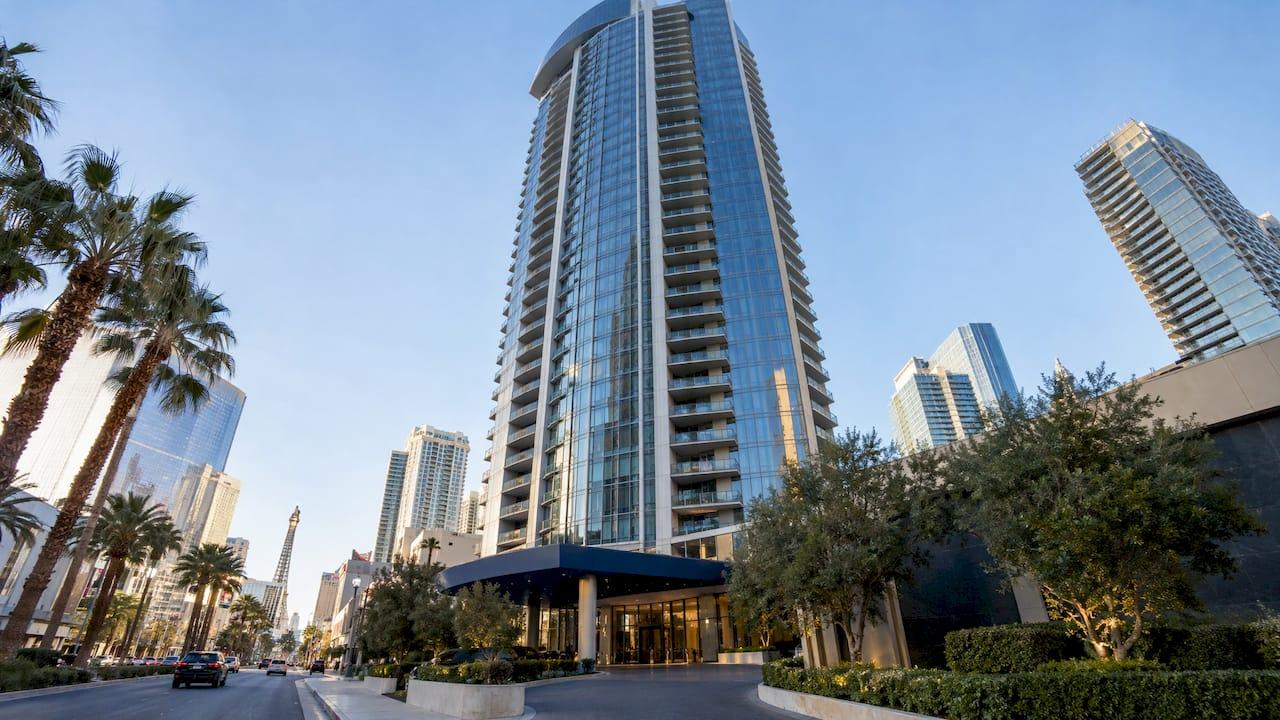
A Las Vegas luxury high-rise is, at its best, a vertical estate: a residence set among the clouds with views that turn the Strip, the desert and the Spring Mountains into a living canvas, served by the staff, security and amenities of a private resort. The market for such residences is small, tightly held and quietly competitive, and the buyers who succeed in it are those who understand how the towers are priced, what ownership truly entails, and where the finest residences change hands before the public ever sees them.
TL;DR
- Las Vegas high-rise prices reached a record in 2024, with the average sale at $697,890, even as the number of sales fell to its lowest since 2020.
- Scarcity, not weakness, explains the pattern: limited supply and owners who hold their units for the long term.
- Monthly association dues are a defining line in the budget, and the services they fund differ considerably from one tower to the next.
- Rental rules, assessments, reserves and resale terms deserve review before an offer, not after it.
- The most coveted residences often trade privately, which is where an advisor with off-market access changes the outcome.
Table of Contents
- What Defines a Luxury High-Rise in Las Vegas
- Where the Towers Stand
- The Lifestyle Within the Walls
- What Ownership Costs
- Reading the Market: Scarcity as the Governing Force
- Choosing a Residence: The Considerations That Endure
- Governing Documents and Rules to Review Before an Offer
- Buying From Out of State
- Perspective
- Working With Yelena Horton
- FAQ
- Sources
What Defines a Luxury High-Rise in Las Vegas
There is no statutory definition of a luxury tower; the term describes a combination of qualities that the market recognizes at once. Architecture of distinction, a gated or controlled arrival, attentive concierge and security staff, resort-calibre amenities, generous floor plans and, above all, elevation and exposure: these together separate a prestige address from an ordinary condominium building. Price follows these attributes, and within the high-rise segment it spans a wide range, from approachable entry points to the residences that command the highest values per square foot in the valley.
To place that range in context, Applied Analysis data reported by the Las Vegas Review-Journal showed that the average high-rise condo sold for $697,890 in 2024, up from $587,823 in 2023, while the average price per square foot rose to $537 from $501. An average of this kind blends every tier of tower together; the finest buildings sit well above it, and a prospective buyer is wise to regard the figure as a baseline rather than a ceiling.
Where the Towers Stand
The high-rise landscape of Las Vegas clusters in a few distinct districts, each with its own character. The Strip corridor holds the towers most closely tied to resort living, where residences enjoy proximity to dining, entertainment and the energy of the boulevard, along with the most dramatic night-time panoramas. Nearby neighborhoods west of the Strip offer a gentler register: guard-gated communities with landscaped grounds, where towers rise from a garden setting rather than from the street.
The choice between these settings is less a question of price than of temperament. Some owners wish to step from the lobby into the pulse of the city; others prize a measure of seclusion and treat the tower as a retreat above the valley floor. We encourage buyers to spend time in each district at different hours, since a view that is spectacular at dusk may feel very different at noon, and the sounds and rhythms of a neighborhood change with the calendar of events.
The Lifestyle Within the Walls
The daily experience of a luxury tower is shaped by its services as much as by its floor plans. Residents typically look for staffed entrances, secure access to elevators and parking, fitness and wellness facilities, pools and lounges, and the quiet convenience of a concierge able to receive deliveries and coordinate services. Some communities extend this with recreation of a more traditional kind; as one example, a 2016 Review-Journal report noted that Turnberry Towers residents had access to private tennis courts and putting greens, which illustrates how far a tower's grounds can reach beyond the building itself.

For the second-home owner, this arrangement carries a particular grace: the residence can be closed for weeks at a time with the quiet assurance that staff and security remain in attendance. For the full-time resident, it offers a life of considerable ease, in which the maintenance of the exterior, the common areas and the shared amenities is entrusted to others.
What Ownership Costs
The purchase price is only the first figure in the budget. Association dues are the recurring cost that most defines high-rise ownership, since they fund the staff, security, utilities for common areas, amenities and reserves that make the building what it is. To see the scale, consider that in 2016 Turnberry Towers dues ranged from $542 to $934 per month, with the higher figure applying to a two-bedroom residence with a den. That report is a decade old, and current dues at any building should be confirmed from the association's own documents; its enduring lesson is that dues scale with residence size and with the breadth of services provided.
Beyond dues, a thoughtful buyer builds the full picture: property taxes, insurance on the interior of the unit, utilities, any parking or storage fees, and the possibility of a special assessment should the building require a major repair or system upgrade. None of this diminishes the appeal of tower living; it simply means that two residences with the same purchase price can carry very different annual commitments, and that the comparison belongs in the analysis from the first viewing.
Reading the Market: Scarcity as the Governing Force
The most instructive feature of the recent market is the divergence between volume and value. The Review-Journal reported that 2024 high-rise sales fell to their lowest level since 2020 even as prices reached a record, a pattern attributed to limited supply and to owners who hold their units for long-term occupancy or investment. The same reporting pointed to constrained inventory and firm demand as drivers of price gains, particularly at sought-after buildings such as the Waldorf.
For a buyer, the implication is practical. When few residences come to market, the best of them are often spoken for quickly, and the buyer who waits for a public listing may find that the choicest floors and exposures have already passed to someone better informed. For a deeper reading of where values are heading, our overview of Las Vegas luxury real estate market trends sets the tower segment within the wider luxury market.
Choosing a Residence: The Considerations That Endure
Several qualities determine whether a high-rise residence will serve its owner well over many years, and they reward patient comparison.
Exposure comes first. A Strip-facing residence offers spectacle; an east or west orientation brings its own interplay of morning and evening light and its own demands on glazing and cooling; a mountain view offers calm. Floor height matters as well, for it governs both the sweep of the view and the degree of separation from street-level activity. Within a given building, two units of identical size can differ markedly in value for these reasons alone.
Next comes the plan itself: ceiling heights, the proportion of the principal rooms, the placement of terraces, the quality of finishes and the flexibility of a den or additional suite. The building's own condition and governance deserve equal attention, including the health of its reserves and the clarity of its rules, which we address below. Finally, consider liquidity: the buildings that hold their appeal across cycles are generally those with a distinctive identity, strong services and a loyal owner base. For buyers weighing a tower as an investment, our guide to luxury condo investment in Las Vegas examines the question of long-term value in detail.

Governing Documents and Rules to Review Before an Offer
Every tower is governed by an association whose rules shape daily life, and in a luxury building those rules tend to be more exacting than in a conventional neighborhood, since residents share walls, floors, elevators and costly common spaces. The documents reward careful reading, and a buyer should expect to examine, with an advisor and, where appropriate, an attorney, the following matters.
Rental policy is the first: whether leasing is permitted at all, the minimum lease term, any cap on the number of rented units, and any registration or fee for tenants. Short-term rental is commonly restricted in residential towers, and a buyer who intends to generate income from the unit should confirm the position in writing before committing. Pet policies, use of balconies, renovation approvals, move-in and move-out procedures, and quiet hours are further points that shape how a residence may be enjoyed.
The financial health of the association is equally important. Review the budget, the reserve study, any planned capital projects, any special assessments already levied or under discussion, and the extent of delinquent dues among owners. A well-reserved association is a quiet asset; one with thin reserves may pass costs to owners at an inconvenient moment. Finally, understand the resale terms: any right of first refusal, transfer fees, or approval procedures that could affect a future sale. If you eventually plan to sell, our seller's guide to luxury condos in Las Vegas shows how presentation and positioning influence the result.
Buying From Out of State
Many of the buyers drawn to Las Vegas towers arrive from California, New York and other states, motivated by tax considerations, lifestyle or business. A high-rise is well suited to this journey: the residence is secure, largely maintenance-free and ready for occupancy, which eases the transition for a family dividing its time or relocating in stages.
The practical challenge is distance. Evaluating a building, reading its documents and negotiating terms are all more difficult from afar, and a buyer is well served by an advisor who can arrange private viewings, coordinate inspections and manage the sequence of steps through closing. Our guide to planning a cross-country move addresses the logistics of a relocation of this kind. Because tax and residency questions are personal, they belong with a qualified tax professional and attorney in the relevant states, ideally consulted before a purchase is finalized.
Perspective
We regard a luxury high-rise as a decision about a way of living as much as an asset, and the two should be examined together. The finest towers in Las Vegas offer a rare combination of security, service and elevation, and their scarcity is precisely what makes access so decisive.
This is where our approach is designed to serve you. Many of the most desirable residences are never marketed broadly; we offer exclusive access to off-market properties, so that you may consider them before the wider market does. Our negotiation strategy is built around your position, and our evaluations weigh both lifestyle and investment potential, so that a residence is chosen for how it will be lived in and how it will be held.
For clients relocating from out of state, our relocation concierge shapes the journey from first viewing to the day you receive the keys. And because we are backed by Sotheby's International Realty and its global network, those who sell a tower residence with us benefit from reach well beyond the valley.
Yelena
Working With Yelena Horton
For buyers and sellers of luxury residences, we offer buyer and seller representation, expert negotiation, a relocation concierge, financing insight, investment perspective, new construction guidance and luxury marketing with global syndication. Each is tailored to the particular residence and the particular client, and each begins with a private conversation about what you wish your next address to be. Begin at Yhluxrealestate to introduce yourself and describe the residence you have in mind.

If you are considering a tower residence as part of a wider search, our luxury real estate blog gathers guidance on neighborhoods, waterfront living, new construction and market conditions across Las Vegas.
FAQ
How much does a luxury high-rise condo cost in Las Vegas?
Prices vary widely by building, floor and exposure. As a reference point, the average high-rise condo sale price in 2024 was $697,890, or $537 per square foot, across all tiers of tower. The most prestigious buildings command considerably more, so the best guide is a review of recent sales in the specific tower you prefer.
Are Las Vegas high-rise prices rising?
The average price reached a record in 2024, according to the Review-Journal's reporting on Applied Analysis data, even as the number of sales declined. Limited supply and long-term owners were cited as factors. Because conditions evolve, a current review of recent sales is the sound way to judge any particular building.
What are the ongoing costs of owning a high-rise condo?
The principal recurring cost is the association dues, which fund staff, security, common areas and amenities; in 2016, for instance, Turnberry Towers dues ranged from $542 to $934 per month. Property taxes, insurance, utilities and possible special assessments are added to that. Current figures should always be confirmed from the association's documents.
Can I rent out a high-rise condo in Las Vegas?
That depends entirely on the building's governing documents, which may set minimum lease terms, caps on rentals or restrictions on short-term use. Confirm the policy in writing before you make an offer, particularly if rental income is part of your plan.
Can I buy a high-rise from out of state?
Yes, and many buyers do. With an advisor coordinating private viewings, document review and the steps to closing, the process can be managed remotely with confidence. Our relocation concierge exists for precisely this purpose.
Sources
- High-rise condo sales falling; prices rising, Las Vegas Review-Journal
- Don't forget HOA fees when budgeting for a high-rise, Las Vegas Review-Journal