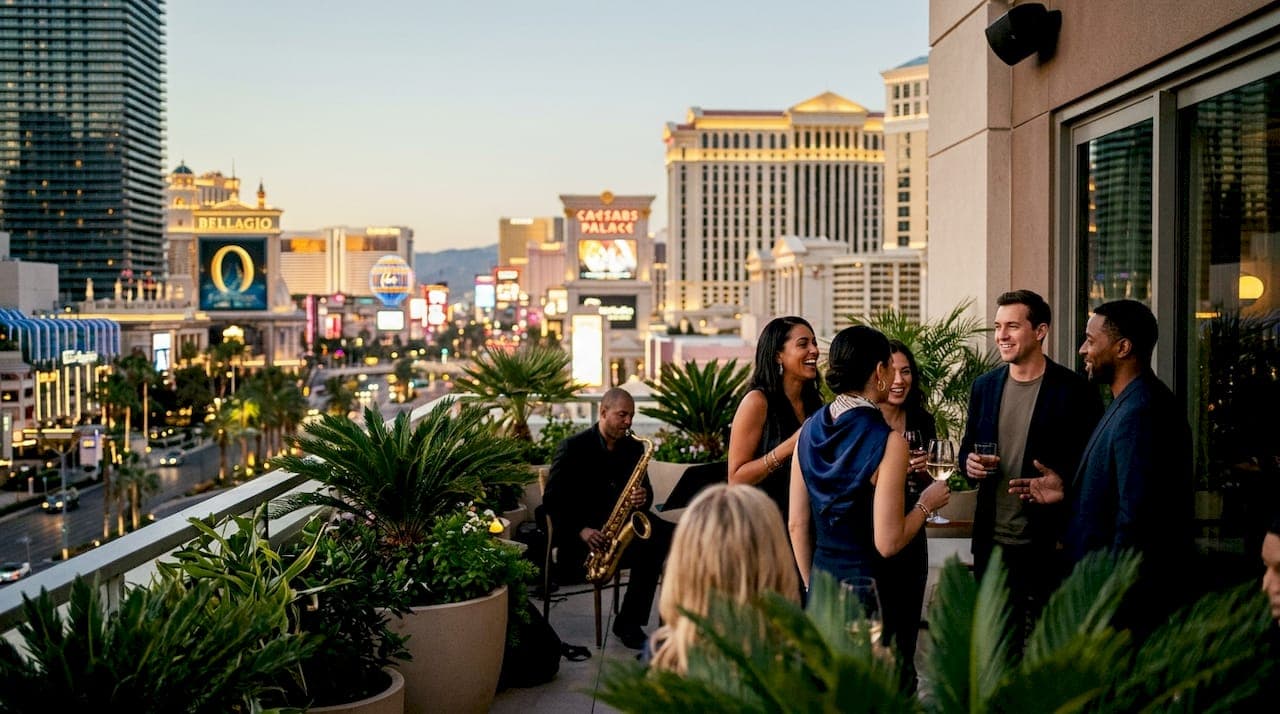
The Las Vegas entertainment lifestyle for New Yorkers represents a fundamental shift from Manhattan's neighborhood-driven culture to a resort-centered world of uninterrupted luxury, spectacle, and social abundance. Where New York offers cultural depth spread across five boroughs, Las Vegas concentrates its entire identity into a single, radiant corridor of experience. Las Vegas ranks #1 in US nightlife destination rankings, placing well ahead of New York City, which lands at #7. That gap reflects something real: Vegas operates on a different premise entirely, one built around uncompromising hospitality and the art of the unforgettable night.
1. How the Las Vegas entertainment lifestyle differs for New Yorkers
New York's nightlife thrives on cultural variety, experimental venues, and the organic energy of neighborhoods like the East Village or Williamsburg. Las Vegas operates on a different architecture entirely. Vegas's 24-hour entertainment model means that the energy you find at midnight on a Tuesday rivals what New York delivers on a Saturday. That continuity is the defining feature of the Las Vegas entertainment lifestyle for New Yorkers making the comparison.
The density of options along the Strip is without parallel in the United States. Mega-clubs, residency concerts, theatrical productions, casino floors, and celebrity chef restaurants exist within walking distance of one another, creating a self-contained world of indulgence. Vegas operators cannot afford "off nights," which forces a standard of atmosphere, energy, and service that New York venues, relying on cultural cachet, rarely match with such consistency. For New Yorkers accustomed to hunting for quality across the city, that reliability is both surprising and deeply satisfying.
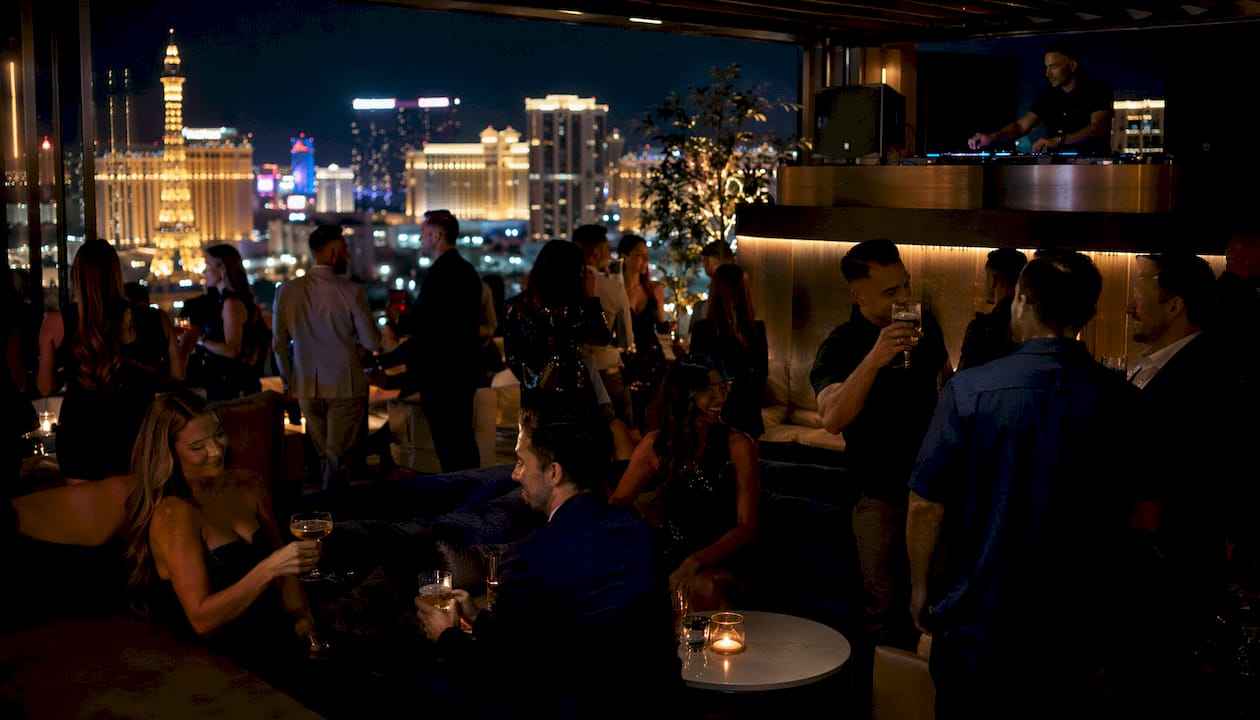
New York's underground scenes and neighborhood bars cultivate intimacy and discovery. Las Vegas trades that intimacy for spectacle and scale. Neither is superior. They are simply different philosophies of pleasure, and understanding that distinction is the first step toward fully appreciating what Vegas offers.
Pro Tip: Visit the Strip on a Wednesday or Thursday evening. Crowds are thinner, service is more attentive, and club promoters are more generous with table minimums than on weekends.
2. Luxury resort shows and cultural landmarks worth your time
Las Vegas resorts deliver a caliber of live entertainment that New Yorkers find genuinely impressive. Cirque du Soleil's "Mad Apple" at the New York-New York Hotel and Casino blends acrobatics with New York-inspired comedy and music, making it a particularly resonant choice for visitors from the city. The production values are extraordinary, and the intimacy of the theater format creates an experience that large Broadway houses rarely replicate.
The Neon Museum on Las Vegas Boulevard preserves the iconic signs of the city's mid-century golden era. It reads as a genuine cultural institution, not a tourist trap, and New Yorkers with an appreciation for design history find it unexpectedly moving. The Mob Museum downtown offers a similarly serious curatorial approach, presenting the history of organized crime in America with the depth of a major metropolitan museum.
Celebrity chef dining is de rigueur across the Strip's luxury resorts. Gordon Ramsay, Nobu Matsuhisa, and José Andrés all maintain flagship or signature restaurants in Las Vegas, offering New Yorkers familiar names in dramatically different settings. The resort context elevates the meal into an event, with service standards calibrated to match the grandeur of the surroundings.
Pool parties at properties like the Wynn or Encore represent a social format that New York simply cannot replicate. They begin in the late morning and extend through the afternoon, blending music, cocktails, and social theater in a way that feels entirely native to the Las Vegas experience.
3. Lifestyle adjustments New Yorkers should expect
The cost of living difference between the two cities is substantial and immediate. Rent in New York runs 185.5% higher than in Las Vegas, and the overall cost of living including rent is approximately 87.2% lower in Vegas. For New Yorkers paying $4,000 per month for a one-bedroom apartment, the financial relief of Las Vegas is not abstract. It is transformative.
Transportation requires a genuine mental adjustment. Las Vegas's urban layout is less walkable than New York's, and the subway culture that defines daily life in the five boroughs does not exist here. The Strip itself is pedestrian-friendly, and the Las Vegas Monorail connects several major resort properties. Outside the tourist corridor, however, a car is not optional. New Yorkers who have not owned a vehicle in years will need to recalibrate their sense of urban mobility.
The social atmosphere in Las Vegas resorts differs markedly from New York's neighborhood culture. Interactions are warmer and more transactional in the best sense: staff are trained to create connection, and fellow guests arrive in a spirit of celebration. The city's social customs reward openness and a willingness to engage with strangers, which New Yorkers sometimes interpret as superficiality but which, on closer inspection, reflects a genuine hospitality ethic.
Pro Tip: Grocery prices in New York run 44.8% higher than in Las Vegas. Stocking a kitchen in Vegas costs significantly less than in Manhattan, which offsets the cost of occasional luxury dining on the Strip.
4. Nightlife options that attract New York culture lovers
Las Vegas nightlife attracts New York culture lovers for reasons that go beyond volume and spectacle. The city's continuous entertainment availability means that the social calendar never closes. Daytime pool parties transition into sunset cocktail hours, which give way to club nights that run until dawn. That unbroken arc of social possibility is genuinely novel for New Yorkers accustomed to last-call at 4:00 AM.
The club culture on the Strip operates at a scale that New York's most celebrated venues cannot match. Venues like Omnia at Caesars Palace and Hakkasan at the MGM Grand host residencies from globally recognized DJs, with production budgets that transform a night out into a full sensory production. New Yorkers who have experienced the best of Manhattan's club scene find these venues genuinely impressive rather than merely large.
Las Vegas leads for Canadian and Mexican visitors seeking nightlife, while New York draws more European travelers favoring cultural diversity. That distinction reveals something important about the two cities' identities. Vegas is built for maximum entertainment delivery; New York is built for maximum cultural discovery. New Yorkers who arrive in Vegas with that understanding enjoy both cities more fully.
5. Practical tips for New Yorkers navigating Vegas entertainment
The Strip concentrates the most celebrated entertainment, but downtown Las Vegas, centered on Fremont Street, offers a rawer and more affordable version of the Vegas experience. The Fremont Street Experience, a canopied LED light show above a pedestrian mall, draws crowds nightly and costs nothing to attend. For New Yorkers who find the Strip's luxury pricing relentless, Fremont Street provides genuine entertainment at a fraction of the cost.
Ticketing for major shows rewards advance planning. Productions like "Mad Apple" and residency concerts at venues such as the Dolby Live at Park MGM sell out weeks in advance. New Yorkers accustomed to last-minute Broadway rush tickets will find Vegas's premium entertainment less forgiving of spontaneity. Book at least two weeks ahead for headline shows.
Las Vegas caters more to luxury and mid-range entertainment than to budget travelers, which differs from New York's wide spectrum of price points. That said, free entertainment is genuinely abundant. The Bellagio Fountains, the Mirage volcano display, and the conservatory at the Bellagio all deliver spectacle without a cover charge. New Yorkers on a considered budget can build a rich Vegas itinerary around these anchors and supplement with one or two premium experiences.
The optimal trip length for Las Vegas runs 2–7 days depending on your preferred pace. Three to four days covers the Strip's highlights without exhausting the senses. Five to seven days allows for day trips to Red Rock Canyon or the Valley of Fire, which offer a striking counterpoint to the city's electric intensity.
Key takeaways
The Las Vegas entertainment lifestyle rewards New Yorkers who arrive prepared for a city built on luxury hospitality, continuous social energy, and resort-scale spectacle rather than neighborhood discovery.
| Point | Details |
|---|---|
| Nightlife ranking gap | Las Vegas ranks #1 in US nightlife; New York ranks #7, reflecting Vegas's 24-hour operational advantage. |
| Cost of living relief | Rent runs 185.5% higher in New York, making Las Vegas a financially compelling relocation destination. |
| Transportation shift | Las Vegas requires a car outside the Strip; New Yorkers must plan for reduced transit options. |
| Entertainment pacing | Vegas entertainment runs continuously; book headline shows 2+ weeks ahead to avoid sellouts. |
| Cultural complement | Vegas delivers spectacle and hospitality excellence; New York delivers cultural variety and discovery. |
What I've learned watching New Yorkers arrive in Las Vegas
New Yorkers arrive in Las Vegas with a particular kind of skepticism. They have seen Times Square, they have eaten at Per Se, and they have danced at clubs that no longer exist. They arrive expecting to be underwhelmed, and they almost never are.
What surprises them most is not the scale. It is the consistency. In New York, a great restaurant can have a terrible night. A celebrated club can feel hollow on the wrong evening. In Las Vegas, the hospitality infrastructure is engineered to prevent that. The service standards, the production values, the sheer organizational discipline behind a resort operation of this magnitude, these are things New Yorkers rarely encounter at home, and they register immediately.
I have also watched New Yorkers struggle with the car culture and the spatial logic of a city built around a single corridor. That adjustment is real and should not be minimized. But for those considering relocation, the financial arithmetic of Las Vegas is genuinely liberating. The money saved on rent alone funds a lifestyle that would be aspirational in Manhattan.
My honest advice: come for a long weekend before you commit to anything permanent. Let the city show you what it is, not what you expect it to be. The Las Vegas entertainment lifestyle is not a lesser version of New York. It is a different proposition entirely, and for the right person, it is a superior one.
— Yelena
Yhluxrealestate: your guide to Las Vegas luxury living
For New Yorkers drawn to the Las Vegas entertainment lifestyle, the next logical question is where to live within it. Yhluxrealestate, led by Yelena Horton and backed by Sotheby's International Realty, offers exclusive access to off-market luxury properties that rarely appear on public listings. The relocation concierge service is designed specifically for out-of-state buyers navigating an unfamiliar market, providing guidance on neighborhoods, lifestyle fit, and investment potential with the authority of deep local knowledge.

Yhluxrealestate's global network and uncompromising attention to detail mean that New Yorkers accustomed to high-stakes real estate transactions will find the process both familiar in its rigor and refreshing in its results. The Las Vegas luxury market rewards those who move with precision and insider access. Yhluxrealestate provides both.
FAQ
What makes Las Vegas nightlife different from New York?
Las Vegas operates a 24-hour entertainment model with luxury resort-based clubs, residency concerts, and casinos that never close. New York's nightlife is culturally richer and more geographically diverse but operates within time-restricted venues.
Is Las Vegas affordable for New Yorkers relocating from Manhattan?
Yes. Rent in New York runs 185.5% higher than in Las Vegas, and the overall cost of living is substantially lower, making Las Vegas one of the most financially attractive relocation destinations for Manhattan residents.
How long should a New Yorker plan for a first Las Vegas trip?
A trip of 3–4 days covers the Strip's major entertainment highlights comfortably. Extending to 5–7 days allows for day trips to natural landmarks like Red Rock Canyon.
Do New Yorkers need a car in Las Vegas?
Outside the Strip, a car is necessary. The Strip itself is walkable and served by the Las Vegas Monorail, but the broader city lacks the transit infrastructure that New Yorkers rely on daily.
What cultural experiences in Las Vegas appeal most to New Yorkers?
The Neon Museum, the Mob Museum, Cirque du Soleil productions, and celebrity chef restaurants consistently resonate with New Yorkers who appreciate serious cultural curation alongside high-end entertainment.