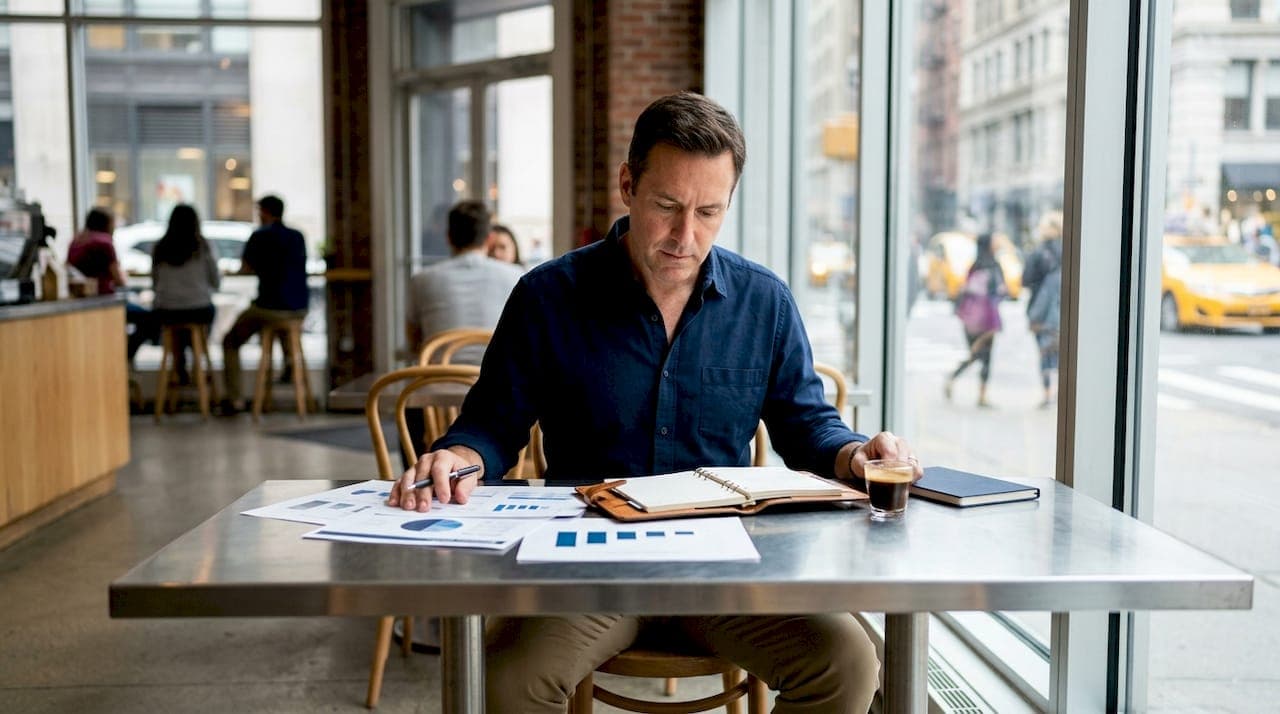
East Coast buyers evaluate the Las Vegas market by anchoring their analysis in three layers: quantitative market metrics, property presentation quality, and remote verification discipline. The standard industry term for this process is comparative market analysis, though buyers from New York, Boston, or Washington D.C. apply it with a distinctly remote lens, relying on data and digital impressions far more than their local counterparts. The average Las Vegas home value sits at $426,583 as of march 2026, down 2.7% year over year, with homes going to pending in roughly 44 days. Those two numbers alone tell a disciplined buyer whether the market rewards patience or demands urgency.
How East Coast buyers evaluate the Las Vegas market: core metrics first
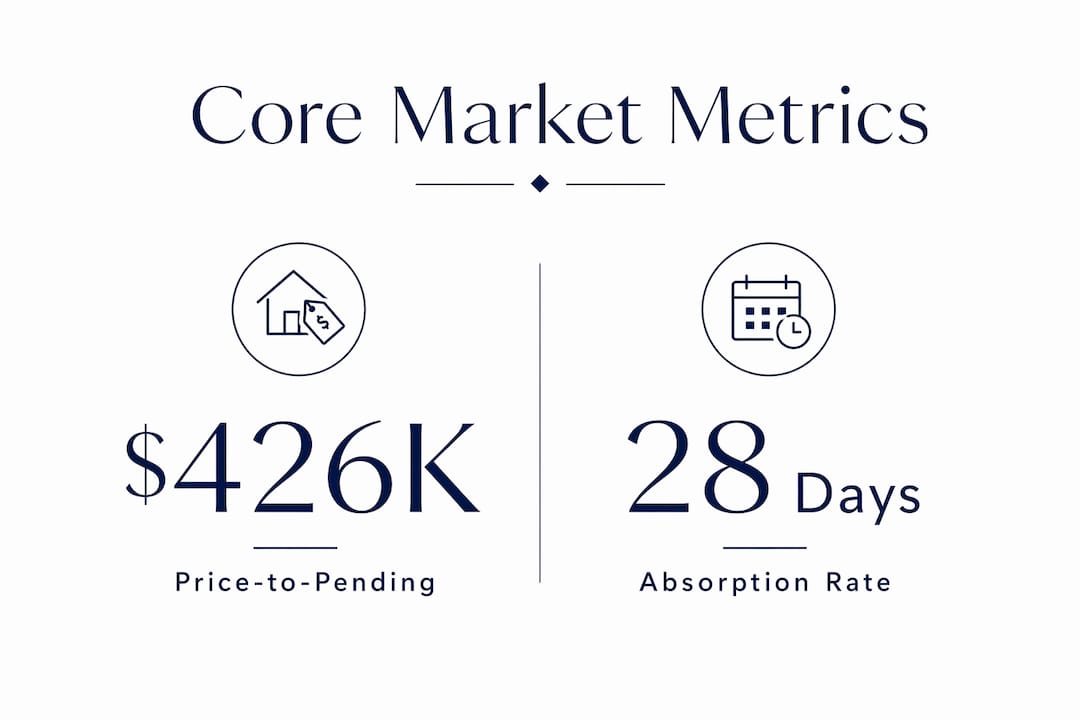
The most reliable starting point for evaluating Las Vegas real estate is the price-to-pending velocity ratio. When homes average 44 days to pending, the market is neither frenetic nor stagnant. That tempo gives East Coast buyers a meaningful window to conduct due diligence without the pressure of a 48-hour bidding war.
Price trends add a second layer of context. A 2.7% year-over-year decline signals a buyer's market, which is confirmed by sale-to-list ratios. Homes sold in Las Vegas in may 2026 closed at an average of 1.22% below asking, with a sale-to-list ratio of 99%. That gap is modest, but it represents real negotiating room for buyers who understand how to position an offer.
Days on market, list price reductions, and absorption rate complete the core picture. Absorption rate measures how quickly available inventory sells; a rate above six months favors buyers. East Coast buyers who track these three metrics together build a defensible view of market health before they ever book a flight to Nevada.
| Point | Details |
|---|---|
| Average home value | $426,583 as of march 2026, down 2.7% year over year |
| Days to pending | Approximately 44 days, indicating moderate demand velocity |
| Sale-to-list ratio | 99% in may 2026, with homes closing 1.22% below asking |
| Market condition | Buyer's market with moderate negotiation opportunity |
Pro Tip: Track the days-to-pending metric weekly, not monthly. A sudden drop from 44 days to 28 days signals a demand surge before price data catches up, giving you a first-mover advantage.
How does home staging influence East Coast buyers' perceptions?
Staging is the single most powerful variable in remote property evaluation, and the data from the National Association of Realtors confirms it. 83% of buyers' agents report that staging helps buyers visualize a property as their future home. For buyers flying in from the East Coast who may tour a home only once, that visualization function is not a luxury. It is the primary mechanism through which value is perceived.
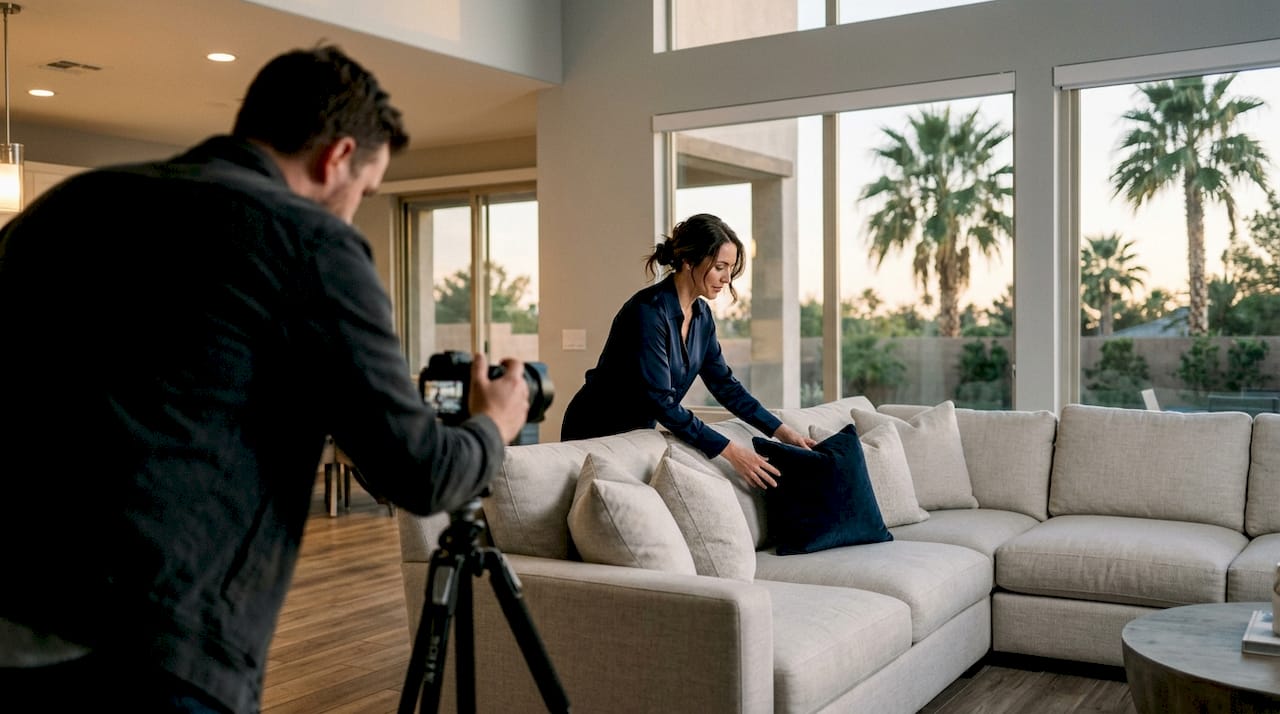
Staged homes also sell faster. Professionally staged Las Vegas homes sell on average 33 days faster than unstaged comparable properties in a buyer's market. That speed differential matters to East Coast buyers who are coordinating relocation timelines, school enrollment windows, or lease expirations back home.
Staging also affects offer price. NAR data shows staging can increase offers by 1–10% above list. That range is wide, but even the lower bound represents tens of thousands of dollars on a $426,583 home. East Coast buyers who understand this dynamic can use the absence of staging as a negotiating signal: an unstaged, vacant property often signals a motivated seller.
The following staging factors carry the most weight for remote buyers assessing Las Vegas homes:
Furniture scale and placement reveal true room dimensions, which listing photos routinely distort. A staged living room with a standard sofa tells you far more about usable square footage than an empty room photographed with a wide-angle lens.
Natural light staging, where window treatments are removed and rooms are photographed at peak sun hours, reflects the actual light quality of a Nevada property. Las Vegas averages over 300 sunny days per year, and a well-staged home captures that as a genuine asset.
Vacant or dated properties benefit most from staging because buyers struggle to project livability onto empty spaces. For East Coast buyers accustomed to dense urban interiors, an unstaged desert-contemporary home can read as cold or unfinished when it is neither.
Outdoor living areas staged with seating and shade structures communicate the lifestyle value of Las Vegas's climate. A bare concrete patio tells a buyer nothing; a staged one tells them everything about how the space performs.
Pro Tip: Ask the listing agent whether staging is physical or virtual before you form an opinion. Physical staging reflects actual room proportions. Virtual staging can mask structural issues, outdated finishes, and spatial limitations that matter enormously at the $400,000-plus price point.
Why is photo authenticity critical for East Coast buyers?
Listing photos are the first showing for nearly every remote buyer. 81% of buyers rate listing photos as the most useful feature during online home searches. That statistic carries a sharp implication: the quality and honesty of those photos directly shapes the offer a buyer submits, often before they have set foot in Nevada.
About 97% of buyers begin their property search online. The listing photo is therefore not supplementary documentation. It is the primary product being evaluated. Virtual staging technology has made it possible to digitally furnish, repaint, and even alter architectural features in listing images. That capability creates genuine risk for buyers who lack a verification framework.
High-net-worth East Coast buyers protect themselves by applying a photo-to-reality checklist during remote evaluation. The checklist targets the details that enhanced photography most commonly obscures:
-
Request unedited photos or a raw video walkthrough directly from the listing agent. Smartphone footage shot without staging or filters reveals flooring condition, ceiling height, and natural light with far greater accuracy than professional photography.
-
Cross-reference room dimensions in the listing against furniture scale in the photos. A king bed in a "master suite" that appears to leave no walking clearance is a red flag worth investigating before traveling.
-
Ask specifically about HVAC age, roofing condition, and water heater installation date. Buyers routinely request these disclosures as part of a photo-to-reality checklist because they represent the highest-cost deferred maintenance items in Las Vegas homes.
-
Review the property's permit history through Clark County's public records portal. Unpermitted additions are common in Las Vegas and rarely visible in listing photography.
-
Commission a pre-offer inspection report from a licensed Nevada inspector before submitting a formal offer. The cost is modest relative to the purchase price, and the findings often reveal conditions that justify a price reduction request.
Transparency in virtual staging supports buyer confidence. Masking real conditions risks losing offers or causing mistrust among remote purchasers. Buyers who encounter undisclosed virtual staging after a site visit frequently withdraw, costing both parties time and money.
What practical steps do East Coast buyers take to verify Las Vegas properties remotely?
Remote due diligence for Las Vegas properties follows a disciplined sequence, and the 44-day pending window is the clock that governs it. East Coast buyers who understand that timeline can coordinate inspections, legal review, and financing contingencies without rushing.
The most effective remote buyers work with a local agent who holds relationships with licensed Nevada inspectors, title companies, and HOA management firms. That network compresses the due diligence timeline significantly. Yhluxrealestate, for example, provides a relocation concierge service specifically designed for out-of-state buyers, coordinating every third-party professional required to close with confidence.
The following practices define a disciplined remote evaluation process:
Schedule a live video walkthrough with the listing agent before committing to travel. A 30-minute FaceTime tour of closets, mechanical rooms, and exterior perimeters reveals more than a curated photo gallery.
Order a Comprehensive Loss Underwriting Exchange (CLUE) report on the property. This report discloses insurance claims history, including water damage, fire, and structural events that sellers are not always required to volunteer.
Verify HOA financial health by requesting the reserve fund study and the most recent board meeting minutes. Las Vegas master-planned communities like Summerlin and Henderson carry HOA structures that can materially affect carrying costs and resale value.
Confirm neighborhood-level price trends using Clark County Assessor data rather than relying solely on aggregated market averages. A neighborhood where assessed values are rising faster than the city average signals localized demand that broader statistics obscure.
Retain a Nevada-licensed real estate attorney to review the purchase agreement before signing. Contract terms in Nevada differ from those in New York, Massachusetts, and other East Coast states, particularly around contingency periods and earnest money forfeiture rules.
Key takeaways
East Coast buyers who evaluate Las Vegas real estate with discipline, combining market metrics, staging literacy, and photo verification, consistently position themselves to negotiate from strength in a buyer's market.
| Point | Details |
|---|---|
| Start with market metrics | Track average home value, days to pending, and sale-to-list ratio before assessing any individual property. |
| Use staging as a signal | Unstaged or vacant properties often indicate a motivated seller and a stronger negotiating position. |
| Verify photos rigorously | Request unedited video walkthroughs and apply a photo-to-reality checklist to avoid misrepresentation. |
| Build a local professional network | Partner with a Las Vegas agent, inspector, and attorney who specialize in out-of-state buyer transactions. |
| Leverage the buyer's market | A 99% sale-to-list ratio and 1.22% below-asking average give prepared buyers real room to negotiate. |
What I have learned from watching East Coast buyers enter this market
I have worked with buyers from New York, Boston, and Washington D.C. who arrive in Las Vegas with extraordinary financial sophistication and a surprisingly narrow view of what the market actually requires. They read the macro data correctly. They understand interest rate environments and cap rates. What catches them off guard, consistently, is how much the presentation layer of a property shapes their own confidence.
A buyer who has spent years evaluating Manhattan co-ops by their financials and location will sometimes dismiss a beautifully positioned Henderson property because the listing photos felt flat. That is a real loss. The inverse is equally dangerous: a buyer seduced by a masterfully staged and photographed home who skips the photo-to-reality verification and discovers deferred maintenance after closing.
The buyers who perform best in this market treat staging and photography as data, not decoration. They ask what the staging is hiding as often as they ask what it is revealing. They use the 44-day pending window as a planning tool, not a countdown. And they never confuse a polished listing with a sound investment. The Las Vegas market in 2026 rewards that discipline generously.
— Yelena
Yhluxrealestate: your guide to Las Vegas luxury from the East Coast
East Coast buyers who want to assess Las Vegas luxury properties with the same rigor they apply to their home markets need a local partner who understands both worlds. Yhluxrealestate offers exclusive access to off-market Las Vegas properties that never appear in public listings, a relocation concierge designed for out-of-state buyers, and negotiation expertise backed by Sotheby's International Realty's global network.

Whether you are evaluating a Summerlin estate or a Henderson custom build, Yhluxrealestate provides the on-the-ground intelligence that transforms remote research into confident decisions. The service is built for buyers who expect uncompromising standards at every stage of the transaction, from first photo review to final closing.
FAQ
What is the average home value in Las Vegas right now?
The average Las Vegas home value is $426,583 as of march 2026, down 2.7% year over year. Homes are going to pending in approximately 44 days.
How long does it take to buy a Las Vegas home from the East Coast?
Most remote buyers complete the purchase process within 45–60 days when they have a local agent, inspector, and attorney coordinated in advance. The 44-day average pending window provides a reliable planning baseline.
Why do East Coast buyers rely so heavily on listing photos?
81% of buyers rate listing photos as the most useful feature in online home searches. For remote buyers who cannot tour a property easily, photos serve as the primary evaluation tool before any in-person visit.
What is a photo-to-reality checklist?
A photo-to-reality checklist is a verification framework that buyers use to confirm that listing photos accurately represent a property's condition. It typically covers HVAC age, roofing, room dimensions, and layout flow.
Is Las Vegas currently a buyer's or seller's market?
Las Vegas is currently a buyer's market. Homes are selling at approximately 1.22% below asking price, with a sale-to-list ratio of 99%, giving prepared buyers moderate but real negotiating leverage.