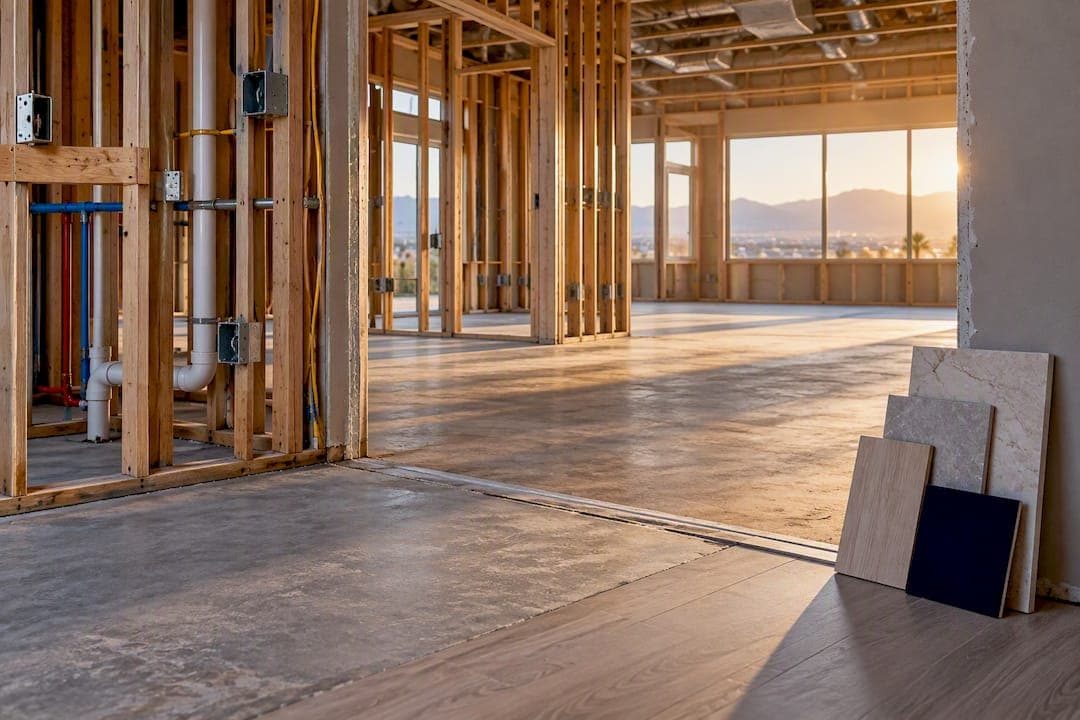
Do now anything that touches structure, walls, plumbing, or wiring; delay mostly cosmetic items until after closing, and keep your upgrade allowance separate from your purchase price until you confirm how your lender treats it. Prioritize durability and function over decorative flourishes. Every dollar you spend behind the drywall protects you from a retrofit bill that dwarfs the original cost.
TL;DR:
- Structural changes, electrical circuits, plumbing rough-ins, and floor transitions must be completed during construction to avoid expensive retrofits later.
- Cosmetic upgrades like fixtures, appliances, and paint should be deferred until after closing to save costs and ensure design flexibility.
- Budgeting should include a separate upgrade ceiling, a contingency fund, and detailed tracking of costs to prevent scope creep and surprises.
- Confirm whether upgrade costs are financed or paid upfront, and understand how they impact your loan disclosures to avoid last-minute surprises.
- In high-heat climates like Las Vegas, prioritize energy-efficient windows, HVAC sizing, insulation, and water-saving fixtures to optimize long-term utility costs.
Table of Contents
- Which Design Center Upgrades Should You Choose First?
- How Much Should You Budget for a Design Center Allowance?
- How Do You Prepare for a Design Center Appointment?
- Should You Buy Upgrades Through the Builder or Wait Until After Closing?
- What Financing and Contract Terms Should You Confirm Before Committing?
- Do Design Center Upgrades Increase Resale Value?
- What Should Las Vegas Buyers Prioritize at the Design Center?
- A Buyer Advocate's Take on Design Center Priorities
- Get New-Construction Guidance Before You Sign
- Primary Sources for New-Construction Buyers
- Sources
- FAQ
Which Design Center Upgrades Should You Choose First?
Design center upgrades fall into two categories, and confusing them is the single most expensive mistake new homebuyers make. The first category involves anything hidden inside the walls, under the slab, or built into the framing. The second involves anything you can see, touch, and swap out after you move in. Get this distinction right before your appointment, and you will walk out having spent your allowance where it truly matters.
Do now categories exist because they become exponentially more expensive, or outright impossible, once drywall goes up and the concrete cures. These include structural changes and layout adjustments, additional electrical circuits and outlet placements, plumbing rough-ins for future bathrooms or wet bars, blocking and backing for future grab bars, TV mounts, or heavy cabinetry, and any main-floor flooring that ties into the subfloor height or transitions between rooms. The NAHB's buyer guidance is blunt about this: behind-the-walls items like circuits, plumbing rough-ins, and structural changes belong on your "do now" list because they are expensive or disruptive to add after the fact.
Do later categories are the ones you can safely defer, often at a lower cost, because they don't require opening anything up. Decorative light fixtures, most freestanding appliances, paint colors, window treatments, and mirrors all fall here. A builder-grade pendant light over your kitchen island costs a fraction to swap after closing compared to what the design center charges to upgrade it during construction, and you retain full control over the exact style once you've lived in the space.
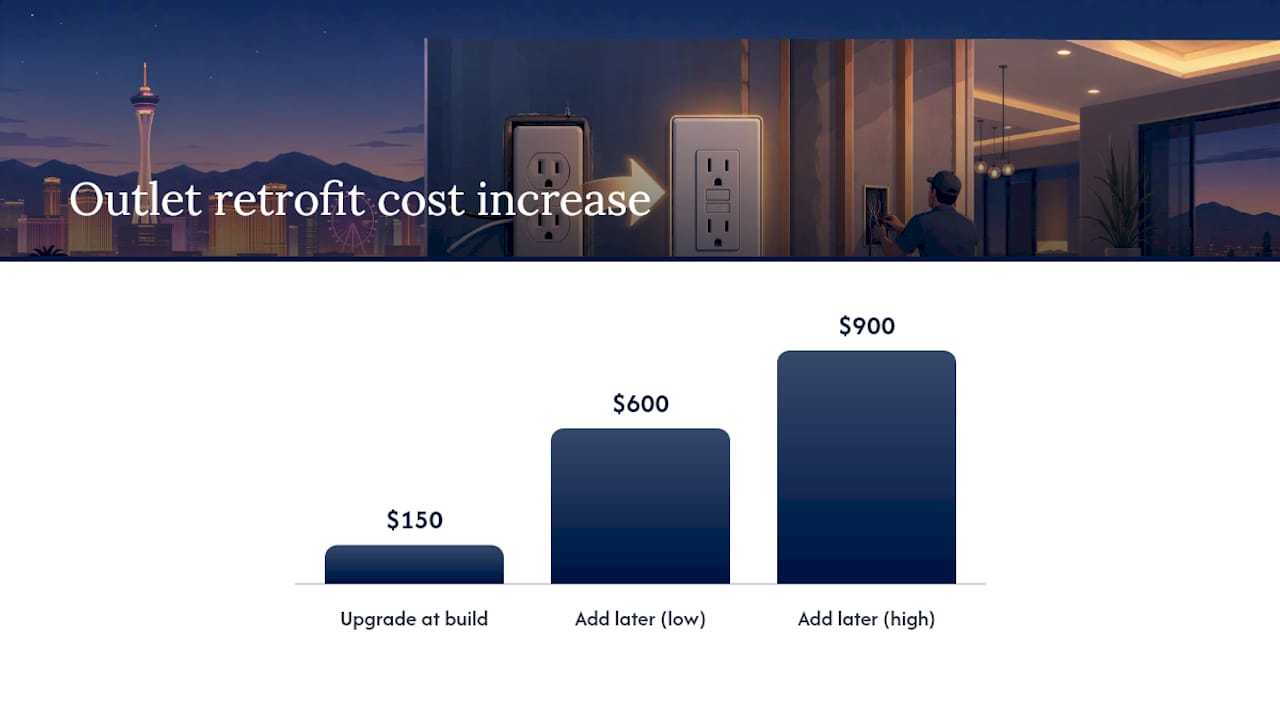
Consider a buyer who skips the extra kitchen outlet during the design center appointment to save $150, planning to add it "later." After drywall, insulation, and paint, that same outlet now requires cutting into a finished wall, fishing wire through insulation, patching, texturing, and repainting. What was a $150 line item becomes a $600 to $900 electrician invoice, assuming no structural surprises. The same math applies to plumbing: adding a bathroom rough-in after the slab pours can mean jackhammering concrete.
Here's a quick reference for sorting your own priority list:
- Do now: structural or layout changes, added electrical circuits and outlets, plumbing rough-ins, blocking/backing for future fixtures, main-floor flooring tied to subfloor transitions
- Do later: decorative light fixtures, most appliances, interior paint, window treatments, mirrors, cabinet hardware
The NAHB's own analysis of invisible upgrades reinforces this logic. HVAC capacity, plumbing lines, wiring, and floor-plan adjustments determine how well your home performs for the next twenty years. Finishes are personality. Infrastructure is permanence, and permanence should come first.
Pro Tip: Ask your design center consultant about "rough-in now, finish later" options. You can run conduit or a dedicated circuit and install blocking during framing, then wait to buy the actual fixture, ceiling fan, or grab bar until after you move in. You lock in the hard-to-change infrastructure without committing your full budget upfront.
How Much Should You Budget for a Design Center Allowance?
Design center costs cluster in predictable zones, and knowing those zones before your appointment keeps you from blowing your allowance on the first few rooms and running short by the time you reach the primary bath. Electrical add-ons like extra outlets, recessed lighting, or dedicated circuits for a home office typically run in modest per-item increments that add up quickly across a full floor plan. Hardwood or luxury vinyl plank upgrades over builder-grade carpet or laminate carry a noticeable per-square-foot premium, especially across open-concept main floors. Tile upgrades in bathrooms, particularly full-height shower surrounds or larger-format floor tile, can shift a bathroom budget substantially depending on the material tier. Cabinet layout changes, like adding a kitchen island or reconfiguring pantry storage, tend to be priced per linear foot and vary widely by builder and region, so confirm current local pricing directly with your design center rather than relying on national averages.
A workable budgeting method looks like this:
- Set a separate upgrade ceiling. Decide on a dollar amount for design center upgrades that is distinct from your base purchase price, so you can track it independently.
- Build in a contingency. Reserve 10 to 15% of that ceiling for substitutions, discontinued materials, or lead-time-driven change orders. Keeping this buffer inside your upgrade ceiling, rather than treating it as an afterthought, means a mid-construction material swap doesn't derail your whole budget.
- Track every selection in a spreadsheet. List each item, its cost, its category (do now or do later), and its lead time. This single document becomes your negotiating tool and your record for the lender.
- Confirm lender treatment before you sign. Ask your loan officer whether upgrade costs roll into your mortgage or require separate payment, since this changes your cash-to-close calculation.
Scope creep is the quiet budget killer at most design centers. A consultant walks you through a beautifully staged model, and suddenly you're adding a fireplace surround you never planned for. Combat this by bringing your written priority list into the appointment and referring back to it out loud. If you want single-item price clarity rather than bundled package pricing, ask directly. Bundled packages often obscure which individual item is driving the cost, making it harder to trim later.
Keeping a documented contingency and asking for substitution and cancellation policies in writing protects you from the lead-time surprises that hit nearly every new build at some point during construction.
How Do You Prepare for a Design Center Appointment?
A design center appointment moves fast, and consultants are trained to guide you through dozens of decisions in a single sitting. Walking in prepared is the difference between choices that fit your life and choices you regret six months after move-in.
- Bring precise measurements. Tape measure in hand, note the dimensions of furniture you're keeping, especially large pieces like sectionals, dining tables, and bed frames, so you can confirm room flow and outlet placement before committing to a layout.
- Bring appliance specifications. If you already own a refrigerator, washer, or specialty range you plan to bring, note its exact dimensions. Small measurement errors on appliance fit or island seating clearance turn into expensive change orders once cabinetry is built.
- Bring reference photos. Save images of finishes, layouts, or color palettes you like. This helps translate vague preferences into specific selections the consultant can price accurately.
- Bring a written priority list ranked by importance. Know your top five must-haves before you walk in, so a tempting but unnecessary upgrade doesn't crowd out something that matters more.
- Bring your budget ceiling in writing. Share a number with your consultant early, so every recommendation gets filtered through what you can actually afford.
- Confirm base inclusions in writing. Model homes often display upgraded finishes as if they're standard. Ask specifically what's included at your price point before assuming the granite countertop or upgraded faucet in the showroom comes with your base package.
- Ask for product specs, lead times, and warranty documentation. Get manufacturer names, model numbers, and warranty terms for major selections like flooring, countertops, and appliances.
- Record every decision and request itemized invoices. A single combined total tells you nothing if you need to dispute a charge later. Itemized paperwork also helps future buyers, and your future self, understand exactly what you paid for.
Pro Tip: Before you leave the appointment, ask directly: "What is your change-order and cancellation policy if a material becomes unavailable?" Getting this answer in writing, before a supply issue forces a substitution mid-build, saves you from a design center swapping in a lesser product without your sign-off.
Should You Buy Upgrades Through the Builder or Wait Until After Closing?
The builder isn't always the cheaper option, and it isn't always the pricier one either. The right channel depends on the category.
Certain upgrades are genuinely cheaper and cleaner when purchased through the builder, because labor and materials are already mobilized on-site. Framing changes fall firmly in this bucket. So does tile installation, since the labor cost of ripping out and reinstalling tile later usually exceeds any markup the builder charges upfront. Integrated cabinetry, where cabinets are built into a layout during construction, is difficult and expensive to retrofit. Electrical rough-ins belong here too, since an electrician is already on-site running wire through open walls.
Other categories consistently deliver better value when you wait and shop retail or hire your own contractor after closing:
- Decorative light fixtures and ceiling fans: Retail and online options offer far more style variety at lower prices than most design center catalogs.
- Cabinet and door hardware: Swapping knobs and pulls is a weekend project, not a construction-phase decision.
- Window treatments: These are almost always cheaper and more customizable through a dedicated window treatment retailer.
- Specialty appliances: Builder-included appliance packages sometimes lock you into specific brands at markup; shopping independently after closing often yields better pricing and selection.
Weigh builder convenience against retail choice honestly. Buying through the builder means one transaction, one warranty conversation, and no coordination of outside contractors during an already busy move. Buying retail later means more legwork but often significant savings and far more design flexibility. Substitution risk matters here too: materials shown in the design center sometimes become discontinued mid-construction, and builders may substitute a comparable product without much negotiation room. For categories you can easily replace later, that risk matters less. For built-in items, ask specifically what happens if your selection becomes unavailable.
What Financing and Contract Terms Should You Confirm Before Committing?
Upgrade decisions don't just affect your design center invoice. They ripple into your loan structure, your closing disclosures, and your cash due at the table, and too many buyers only discover this after they've already signed off on a full package.
Start by confirming whether your upgrade costs are rolled into your mortgage or paid separately, outside of financing. This single question changes your entire disclosure timeline. Under CFPB's TILA-RESPA Integrated Disclosure guidance for construction loans, whether you receive separate or combined disclosures, and how your Loan Estimate and Closing Disclosure are timed, depends directly on how your construction loan is structured. A buyer who assumes upgrades are simply "added to the price" can be caught off guard when a lender requires a revised disclosure and a new waiting period before closing.
Confirm these items before signing your upgrade contract:
- Ask whether upgrade costs are financed into your mortgage or due as a separate payment before or at closing.
- Ask how the appraiser will treat high-end visible finishes, since appraisals rely on comparable sales, not necessarily your upgrade receipts.
- Ask whether your contract itemizes allowances separately from base pricing, so you have a paper trail if a dispute arises.
- Ask about change-order deadlines and what happens if you want to modify a selection after signing.
- Ask about cancellation and substitution terms in writing, particularly for items with long lead times.
- Ask whether draw or inspection fees apply during construction, since these can add unexpected costs to your cash-to-close figure.
Construction financing can introduce inspection or draw fees and shift how upgrade costs get disclosed to you. Confirming these details early with both your lender and your escrow team avoids a last-minute scramble for cash you didn't budget for. If your builder offers seller concessions or credits toward upgrades, review how those interact with your loan terms; common concession mistakes can quietly erode the benefit if the credit isn't structured correctly on your closing disclosure.
Do Design Center Upgrades Increase Resale Value?
Treat resale value as a secondary benefit, not the reason you choose an upgrade. National remodeling ROI data measures completed post-purchase renovations, not builder option menus, so assuming dollar-for-dollar payback on a design center selection is a mistake. Function and durability are safer decision criteria than chasing a resale number that doesn't cleanly apply to your situation.
That said, certain upgrades reliably help marketability even if they don't guarantee a specific return:
- Durable primary bathroom materials: Quality tile, solid surfaces, and quartz counters read as low-maintenance to future buyers browsing listings.
- A coherent kitchen layout: An island that fits the room, sensible traffic flow, and adequate storage matter more to future buyers than any single premium finish.
- Full-height backsplashes: These photograph well and signal a finished, considered kitchen rather than a builder-basic one.
Highly personal choices, like a bold accent wall color baked into a tile pattern or a niche built-in for a specific hobby, tend to serve you well while you live there but rarely move the needle for a future buyer, and can occasionally work against you.
Document your upgrade specifications and warranty terms as you go. When you eventually list your home, whether that's in three years or fifteen, an itemized record of what you upgraded, when, and under what warranty gives your listing agent real material to work with, and comparable sales data will matter more than any single fixture when it comes time to price the home.
What Should Las Vegas Buyers Prioritize at the Design Center?
Building in a hot, sun-heavy climate changes the calculus on several design center categories that generic national checklists gloss over. In Las Vegas and across the broader sunbelt, the invisible infrastructure choices that matter everywhere matter even more, because a mismatch between your home's energy systems and the local climate shows up on every summer utility bill for as long as you own the home.
- Window specifications and solar heat gain coefficient (SHGC): Ask your builder for the exact SHGC rating on standard windows, and whether upgraded low-E glass is available. A lower SHGC blocks more solar heat, which matters enormously when your windows face west or south.
- HVAC sizing and documentation: Don't assume the standard system is correctly sized for your specific floor plan and orientation. Ask for load calculations rather than a generic spec sheet.
- Insulation levels: Confirm attic and wall insulation R-values rather than assuming "builder standard" meets your comfort expectations through a Las Vegas summer.
- Water-wise fixtures: Low-flow fixtures and drought-tolerant landscaping options aren't just an environmental nicety here; they directly affect your utility costs and may align with local water district incentives.
Verify these specs directly rather than guessing, since generic upgrade lists built for milder climates don't always translate. The DOE Efficient New Homes checklist covers energy, ventilation, and EV-ready and PV-ready provisions in detail, and it's a useful document to reference when asking your builder pointed questions about what's actually included.
Outdoor living choices deserve equal weight. Covered patios, strategic shade structures, and even the orientation of your outdoor kitchen affect both livability and your home's cooling load for years to come. If landscaping or exterior modifications are part of your plan, check HOA rules for the community before finalizing choices at the design center, since some exterior upgrades may require separate approval.
Pro Tip: If you're relocating from out of state, coordinate your design center timeline through a relocation concierge rather than juggling vendor calls and lead times solo. Selection conflicts and material delays are far easier to manage when someone local is tracking deadlines on your behalf.
A Buyer Advocate's Take on Design Center Priorities
The mistake I see most often isn't overspending. It's spending the right amount of money on the wrong things. Buyers walk into the design center focused on the countertop they'll see every morning and the light fixture that'll photograph well, and they leave having under invested in the outlet layout, the HVAC sizing, and the plumbing rough-in they'll need in five years but can't easily add later.
My honest recommendation: treat the design center as your one chance to set the home's bones correctly, and treat everything decorative as a decision you can revisit for the rest of your life. Get every specification, every warranty term, and every change-order policy in writing before you sign anything. Verbal assurances from a design consultant carry no weight once you're six months into a dispute over what was actually included in your base price.
If the appointment starts feeling rushed, if you're being pushed to finalize selections faster than you can research them, that's a signal to pause, not to sign. A trusted buyer advisor can walk through your contract and your priority list with you before you commit, and that conversation costs you nothing compared to the retrofit bill you'll face if you get it wrong.
— Yelena
Get New-Construction Guidance Before You Sign
New-construction buyers benefit from having an advocate whose job is protecting your position, not moving you through the showroom faster. New Construction Guidance can help walk you through builder contracts, upgrade allowances, and change-order terms before you sign, so you catch the retrofit-cost traps this article covers before they cost you thousands.

For out-of-state buyers, the Relocation Concierge service coordinates design center timelines, vendor lead times, and selection deadlines so you're not juggling a home build from across the country. Expert Negotiation applies the same client-first positioning to your builder contract that Yelena brings to resale negotiations, backed by Sotheby's International Realty's global network. If you're weighing a new build against an off-market resale opportunity in Las Vegas, or you simply want a second set of eyes on your builder contract before your next design center appointment, reach out to Yhluxrealestate to schedule a conversation.
Primary Sources for New-Construction Buyers
The guidance in this article draws on a handful of authoritative, publicly available resources worth bookmarking as you move through your own build:
- The NAHB buyer's guide to designing your dream home covers prioritization, measurement prep, and written confirmation of base inclusions.
- The DOE Efficient New Homes National Rater Checklist details energy, ventilation, and EV/PV-ready requirements worth verifying with your builder.
- The CFPB's guide to TILA-RESPA construction loan disclosures explains how loan structure affects your disclosure timeline and cash-to-close.
- The NAHB's remodeling ROI guidance clarifies why national renovation payback data doesn't map cleanly onto design center option menus.
Sources
- NAHB: Design your dream home - buyers guide
- DOE Efficient New Homes Single Family Version 2 (Rev. 3) National Rater Checklist
- CFPB: TILA-RESPA Integrated Disclosures — Construction loan disclosure guide
FAQ
How much do design center upgrades cost?
Costs vary widely by builder, region, and upgrade category, so there's no single national figure that applies to every home. Electrical add-ons, flooring upgrades, and cabinet layout changes each carry different per-item or per-square-foot pricing, and confirming current costs directly with your design center is more reliable than relying on outside estimates.
Is $400,000 enough to build a house?
Whether your budget is enough depends heavily on your market, lot cost, home size, and how much of that budget you allocate to design center upgrades versus base construction. In many markets, a disciplined buyer who prioritizes structural and infrastructure upgrades first, and defers cosmetic ones, can stretch that budget further than one who front-loads decorative selections.
What home upgrades are generally not worth the money?
Highly personal or trend-driven finishes, like niche built-ins, bold decorative tile patterns baked into a shower surround, or premium finishes on features few buyers notice, tend to deliver less long-term value than infrastructure upgrades. The NAHB cautions against assuming guaranteed payback on individual builder options, since national remodeling ROI data doesn't measure design center menus directly.
Should I upgrade through the builder or wait until after closing?
Upgrade through the builder for anything built into the structure, like framing, tile installation, integrated cabinetry, and electrical rough-ins, since retrofitting these later is far more disruptive and costly. Wait on decorative fixtures, hardware, window treatments, and specialty appliances, which are typically cheaper and offer more selection through retail or independent contractors after you move in.
How do I know if my design center allowance is being spent correctly?
Track every selection in a spreadsheet against your written priority list, and confirm base inclusions in writing before assuming a showroom finish comes standard. A buyer advisor working on your behalf, like the guidance offered through Yhluxrealestate's New Construction Guidance service, can review your contract and allowance breakdown before you finalize selections.