
Buying a Las Vegas home from California is a fully executable process, one that thousands of California homeowners complete each year using remote technology, coordinated escrows, and strategic financing. The formal term for this transaction type is a remote or out-of-state purchase, and it follows the same legal framework as any Nevada residential sale, with added logistics for documentation and timing. California residents who approach this with a parallel workflow, running their California sale and Vegas search simultaneously, consistently achieve smoother transitions and stronger negotiating positions than those who treat the two transactions as separate events. This guide covers every stage of that process, from virtual tours to closing day.
How to buy a las vegas home from california
The foundation of a successful remote purchase rests on three pillars: the right local agent, the right technology, and the right financing structure. Each one is non-negotiable for California buyers operating at a distance.
The Agent Question
A Nevada-licensed agent with direct experience serving California relocation clients is the single most critical hire you will make. This is not a general competency. The agent must maintain an established network of inspectors, title companies, and escrow officers who are comfortable with remote documentation and accelerated timelines. Yhluxrealestate, led by Yelena Horton and backed by Sotheby's International Realty, specializes precisely in this profile, offering California buyers access to off-market inventory and a dedicated relocation concierge.

Technology and Documentation Tools
Virtual tours are the standard delivery method for remote buyers in 2026. These include live FaceTime or WhatsApp walkthroughs, recorded video sessions at different times of day, and detailed neighborhood drives conducted by your agent. Offers are drafted, negotiated, and executed through platforms like DocuSign, which Nevada title companies accept without reservation. Remote notarization is legal in Nevada, meaning you can complete the entire transaction without setting foot in the state, though some buyers choose to fly in for closing day.
Financing Prerequisites
Nevada lenders require updated credit checks and documentation specific to Nevada's underwriting standards, which typically adds 2–3 weeks to processing time compared to in-state buyers. Work with a lender who has closed loans for California buyers in Nevada before. Pre-underwriting your loan before submitting offers significantly reduces negotiation time and signals to sellers that your financing is solid, a meaningful advantage in competitive Las Vegas neighborhoods like Summerlin, Henderson, and MacDonald Highlands.
Pro Tip: Request that your Nevada agent provide a curated shortlist of Nevada-licensed lenders who have closed California-to-Vegas transactions within the last 12 months. This single step eliminates weeks of underwriting friction.
How to coordinate selling your california home while buying in vegas
The most costly mistake California buyers make is treating their California sale and their Las Vegas purchase as two separate projects with a gap in between. The superior approach is a parallel workflow, where both transactions run on overlapping timelines with synchronized closing dates.
Start Your Vegas Search Early
Begin touring Las Vegas properties during the preparation phase of your California home sale, before you list. Buyers who access pre-MLS and private inventory during this window save 4–8 weeks compared to those who wait until their California home is under contract. That time advantage translates directly into negotiating leverage: you can submit a non-contingent offer in Las Vegas, which sellers strongly prefer, because your California sale is already in motion.
Bridge Loans and HELOCs
If your California equity is locked up until closing, a bridge loan or home equity line of credit (HELOC) gives you access to those funds early. This allows you to make a down payment on your Las Vegas property before your California escrow closes. Bridge loans carry short-term interest costs, but those costs are almost always lower than the price of a rushed decision or a missed property.
The Dual Escrow Strategy
The dual escrow approach is the preferred structure for California-to-Vegas relocations. You open escrow on both properties simultaneously, then close your California home 3–7 days before your Las Vegas closing. That buffer absorbs wire transfer delays, which typically require 24–48 hours between California and Nevada institutions, and gives your escrow team time to confirm funds before the Vegas closing proceeds.
The 3–7 day buffer between closings is not a preference. It is a structural requirement that protects you from carrying two mortgages or losing your Las Vegas property due to a wire timing failure.
If a gap between closings is unavoidable, rent-back agreements on your California home or short-term furnished housing in Las Vegas are both workable solutions. Rent-back agreements allow you to remain in your California home for 30–60 days after closing, giving your Las Vegas escrow time to complete without pressure.
Pro Tip: Negotiate a rent-back clause in your California sale contract from the outset. Sellers who accept rent-back terms give you a controlled timeline rather than a forced one.
Step-by-step remote buying process for california buyers
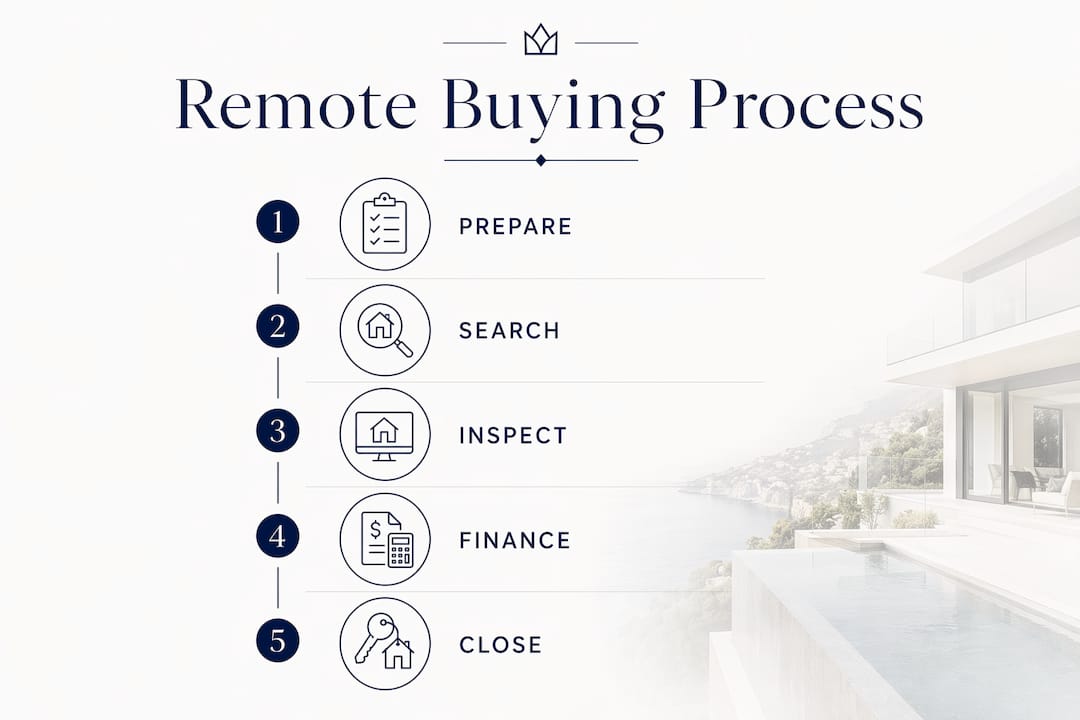
The remote purchase process follows a defined sequence. Deviating from this order creates delays and exposes you to unnecessary risk.
| Stage | Action | Timeline |
|---|---|---|
| Pre-approval and pre-underwriting | Secure Nevada-friendly lender and complete full underwriting | 2–3 weeks before search |
| Property search and virtual tours | Agent curates pre-MLS and MLS listings; live and recorded tours | Ongoing during CA prep |
| Offer submission | Electronic offer via DocuSign with pre-underwriting letter | Within 24 hours of decision |
| Inspection and due diligence | Live video inspection with Q&A; agent present on-site | Days 5–10 of escrow |
| Escrow and remote signing | Remote notarization or in-person signing at Nevada title company | Days 15–25 of escrow |
| Closing day | Wire transfer confirmed; keys released | Day 21–30 of escrow |
The standard escrow period for remote relocation buyers in Las Vegas averages 21–30 days. That timeline accounts for remote documentation, out-of-state underwriting, and wire transfer coordination. Plan your California closing date backward from this window.
During the inspection phase, insist on a live video walkthrough with your inspector. A skilled Nevada inspector will narrate findings in real time, answer your questions directly, and flag issues that a recorded video might compress or omit. Your agent should be physically present during this inspection to provide context on neighborhood norms and comparable properties.
Closing day options for remote buyers include three paths: power of attorney granted to a trusted local party, remote online notarization conducted through a Nevada-approved platform, or a personal trip to Las Vegas for in-person signing. Each is legally valid in Nevada. The power of attorney route requires advance preparation, so discuss it with your escrow officer at least two weeks before closing.
Common mistakes california buyers make when purchasing remotely
Remote buyers who encounter problems almost always make one of five identifiable errors. Recognizing them in advance is the most efficient form of protection.
Treating the Two Transactions as Separate
Buyers who close their California home first and rent temporarily before purchasing in Las Vegas consistently lose negotiating leverage and face higher total costs. Temporary housing adds expense, rushed decisions add risk, and the absence of a synchronized timeline removes your ability to make non-contingent offers.
Closing Vegas Before California
Closing your Las Vegas home before your California sale is complete creates the risk of carrying two mortgages simultaneously. That financial pressure forces decisions that rarely serve your long-term interests. The California-first close, with the 3–7 day buffer, exists specifically to prevent this scenario.
Underestimating Financing Timelines
Out-of-state buyers who begin lender conversations after finding a property they want to purchase routinely lose that property to buyers who completed pre-underwriting weeks earlier. Nevada lenders require documentation that California buyers may not anticipate, and the additional 2–3 weeks of processing time is not negotiable.
Ignoring Wire Transfer Timing
Wire transfers between California and Nevada require 24–48 hours to clear. A closing scheduled without this buffer risks a same-day failure, which can delay your Las Vegas closing by days and trigger penalty clauses in your purchase contract.
Selecting an Agent Without Relocation Experience
A Nevada agent who has never worked with California relocation clients will not know how to structure dual escrows, coordinate with California title companies, or advise on bridge financing. The cost of this gap in expertise shows up in delays, missed contingencies, and suboptimal negotiation outcomes.
Key takeaways
Buying a Las Vegas home from California succeeds when you run both transactions in parallel, close California first with a 3–7 day buffer, and engage a Nevada agent with direct relocation experience before your search begins.
| Point | Details |
|---|---|
| Parallel workflow is essential | Start your Las Vegas search during California home prep to save 4–8 weeks and strengthen your offer position. |
| Close California first | A 3–7 day buffer between closings prevents dual mortgage exposure and wire transfer failures. |
| Pre-underwrite before searching | Complete Nevada lender underwriting before submitting offers to reduce delays and improve competitiveness. |
| Use live video inspections | Insist on real-time inspector walkthroughs with your agent present to catch issues a recorded tour would miss. |
| Agent selection determines outcomes | A Nevada-licensed agent with California relocation experience is the single most consequential hire in this process. |
What i've learned working with california buyers in las vegas
The buyers who arrive at my desk having already done their homework on bridge financing and dual escrow structures close faster and with less stress than anyone else I work with. The ones who struggle are almost always those who assumed the two transactions would sort themselves out sequentially.
What I tell every California client from the first conversation is this: your Las Vegas search should begin the moment you decide to sell, not the moment your California home goes under contract. That shift in thinking changes everything. It gives you time to access pre-MLS inventory, to build a relationship with a Nevada lender, and to submit offers from a position of strength rather than urgency.
The tax advantage alone makes the move worth serious consideration. California homeowners who relocate to Nevada increase their monthly take-home pay by $1,200–$2,000 due to Nevada's absence of state income tax. That figure compounds meaningfully over five years. But the financial benefit only materializes cleanly if the transition itself is executed without a costly gap or a rushed purchase.
Technology has made the remote buying process genuinely reliable. Live video tours, electronic signatures, and remote notarization have removed the logistical barriers that once made out-of-state purchases feel precarious. What technology cannot replace is the judgment of an experienced local agent who knows which neighborhoods are appreciating, which builders have quality control issues, and which sellers are motivated. That local intelligence is where the real advantage lives.
— Yelena
How Yhluxrealestate supports california buyers in las vegas

Yhluxrealestate, led by Yelena Horton and backed by Sotheby's International Realty's global network, is built for exactly this transaction. California buyers working with Yhluxrealestate receive access to off-market and pre-MLS Las Vegas properties before they reach public listings, a dedicated relocation concierge who coordinates dual escrow timing and local service providers, and expert negotiation strategies calibrated for out-of-state buyer positioning. Whether you are purchasing a luxury residence in Summerlin or an investment property in Henderson, the process is managed with the precision and discretion that a high-value transaction demands. Begin your Las Vegas property search with Yhluxrealestate and bring the full weight of local expertise to your California-to-Vegas move.
FAQ
How long does it take to buy a las vegas home from california?
The standard escrow period for remote relocation buyers averages 21–30 days. Add 2–3 weeks for Nevada lender pre-underwriting, and plan your full timeline at 6–10 weeks from initial search to closing.
Can i buy a las vegas home without visiting nevada?
Yes. Nevada law permits remote online notarization, electronic offer submission via platforms like DocuSign, and power of attorney for closing. Many California buyers complete the entire transaction remotely, though some choose to fly in for closing day.
What is the best strategy for selling my california home and buying in las vegas at the same time?
The dual escrow strategy is the most effective approach. Open escrow on both properties simultaneously, close your California home 3–7 days before your Las Vegas closing, and use a bridge loan or HELOC to access equity for your down payment if needed.
Do i need a nevada-licensed real estate agent?
Yes. A Nevada-licensed agent is legally required to represent you in a Nevada transaction. Beyond licensing, select an agent with documented experience serving California relocation clients, as the dual escrow coordination and remote documentation process requires specialized knowledge.
How does nevada's tax advantage compare to california?
California homeowners who relocate to Nevada typically increase their monthly take-home pay by $1,200–$2,000 due to Nevada's lack of state income tax. This advantage applies immediately upon establishing Nevada residency.