
Building a luxury real estate portfolio is defined as the deliberate acquisition, active management, and strategic growth of high-end properties to generate capital appreciation, rental income, and lasting lifestyle value. This is not passive wealth storage. Luxury property investment delivers both capital gains and rental revenue simultaneously, making it one of the most productive asset classes available to high-net-worth investors. Investment in U.S. luxury real estate has increased by 59.9% among buyers with over $5 million net worth since 2020. That figure signals a structural shift, not a cycle, in how the affluent allocate wealth.
How to build a luxury real estate portfolio with clear goals
The foundation of any high-performing portfolio is a precise investment thesis. Before acquiring a single property, you must define whether your primary objective is capital appreciation, rental yield, lifestyle use, or a combination of all three. Each objective demands a different acquisition strategy, financing structure, and management approach.
Capital requirements for luxury real estate are substantial. Entry-level luxury properties in prime U.S. markets typically begin at $1 million, while ultra-prime assets in cities like New York, Miami, or Las Vegas command $5 million and above. Financing options include conventional jumbo loans, portfolio lending from private banks, and asset-backed credit lines. Private banking relationships with institutions such as Goldman Sachs Private Wealth or J.P. Morgan Private Bank often unlock financing structures unavailable to retail borrowers.

Your advisory team is as important as your capital. A trusted luxury real estate agent, a tax attorney familiar with multi-state or international property ownership, a certified public accountant, and a property management firm form the core of a functional team. Most luxury real estate deals happen off-market through specialized agent networks that require buyer financial verification before granting access. Without the right agent, you simply do not see the best properties.
Understanding 2026 market conditions is non-negotiable. Interest rate movements, short-term rental regulations, and foreign ownership rules vary significantly by jurisdiction. HNWIs allocate up to 32% of total portfolio value to real estate, with a growing share directed toward branded residences. That allocation benchmark gives you a rational ceiling for concentration risk.
Pro Tip: Before your first acquisition, write a one-page investment policy statement. Define your target return, acceptable leverage ratio, geographic limits, and exit horizon. This document prevents emotional decisions during market volatility.
How to select prime locations and property types for diversification
Location selection is the single most consequential decision in building a high-end property portfolio. Prime markets share four characteristics: supply constraints, strong employment bases, international buyer demand, and favorable long-term demographic trends. Las Vegas, Miami, Aspen, and Manhattan each satisfy these criteria in different ways, offering distinct risk-return profiles.
Branded residences have become a de rigueur asset class for sophisticated investors. Branded residences command a 33% average global price premium over comparable non-branded luxury stock, rising to 39% in resort markets. That premium reflects the perceived quality assurance, hotel-grade services, and global brand recognition that attract both owner-occupiers and tenants. With 910 global branded residence schemes now active, this asset class has transitioned from niche to institutional grade.
Geographic diversification reduces concentration risk and captures multiple economic cycles. A well-constructed portfolio might combine a primary urban residence in a gateway city, a resort property in a high-demand leisure market, and an international holding in a jurisdiction with favorable tax treatment. Dubai's branded residences deliver 5–7% annual rental yields on managed units, making them a compelling income component alongside lower-yield but higher-appreciation U.S. assets.
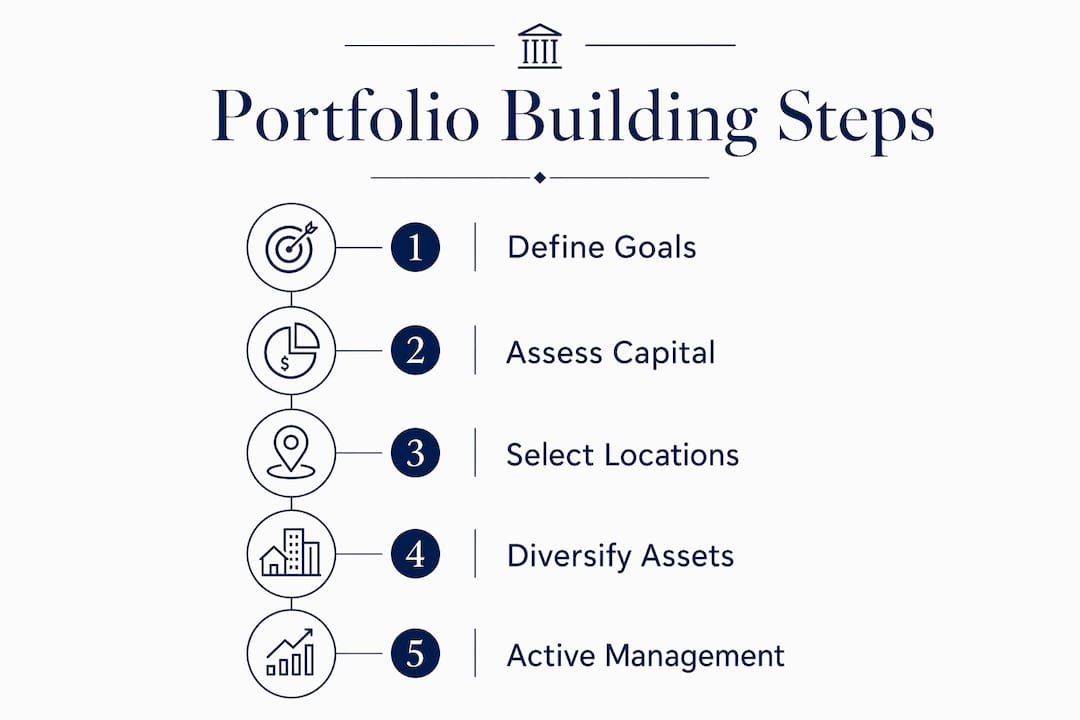
Diversification across property types matters as much as geography. Single-family ultra-prime estates, luxury condominiums, resort villas, and managed branded units each carry different liquidity profiles, maintenance burdens, and income characteristics. Combining these types within one portfolio smooths income volatility and provides multiple exit options.
Pro Tip: In resort markets, prioritize branded residences with hotel-managed rental programs. The operator's existing guest network fills your unit far more efficiently than independent short-term rental platforms.
| Property type | Typical yield profile | Liquidity | Best for |
|---|---|---|---|
| Urban luxury condo | Lower yield, higher appreciation | High | Capital growth |
| Branded resort residence | 5–7% yield, moderate appreciation | Moderate | Income + lifestyle |
| Ultra-prime estate | Minimal yield, strong appreciation | Low | Wealth preservation |
| International managed unit | Variable yield, currency exposure | Moderate | Diversification |
What active management strategies maximize luxury real estate returns?
Passive ownership is the least efficient use of a luxury asset. The shift from passive holding to active asset management is the defining characteristic of high-performing luxury portfolios in 2026. Active management and bespoke concierge services increase rental pricing and asset liquidity in luxury real estate. That means the same property, managed actively, commands higher rents and sells faster than an identical property left unattended.
The core active management disciplines are:
- Smart-home technology integration. Automated climate control, security systems, and energy management reduce operating costs and command premium rents from tech-forward tenants.
- Bespoke concierge services. Offering curated experiences, from private chef arrangements to chauffeured airport transfers, positions your property as a lifestyle product rather than a commodity rental.
- Value-add renovations. Kitchen and bathroom upgrades, outdoor living enhancements, and wellness amenities such as private spas or home gyms directly increase both rental rates and resale value.
- Experiential offerings. Properties marketed with exclusive access to golf memberships, yacht berths, or private club affiliations attract a narrower but far more affluent tenant pool.
Tax efficiency is an active management discipline, not an afterthought. Structures such as 1031 exchanges allow you to defer capital gains taxes when reinvesting proceeds into like-kind properties. Depreciation schedules on luxury assets provide annual deductions that offset rental income. A qualified tax attorney should review your portfolio structure annually.
Reinvesting cash flows into the portfolio compounds returns over time. Rather than distributing all rental income, allocating a portion to property improvements or down payments on additional acquisitions accelerates portfolio growth without requiring fresh external capital.
Pro Tip: Commission a professional property audit every 24 months. An independent assessor identifies deferred maintenance and emerging value-add opportunities before they become costly problems.
How do you mitigate risks in a growing luxury real estate portfolio?
Luxury real estate carries risks that differ materially from those in the broader market. Liquidity is the primary concern. Ultra-prime assets can take 12 to 24 months to sell at full value, particularly in markets with a thin buyer pool. Maintaining adequate liquid reserves outside the portfolio protects you from forced sales during downturns.
Market cycle awareness is non-negotiable. Luxury markets do not move in lockstep with the broader residential market. They respond more acutely to equity market performance, global wealth creation trends, and geopolitical stability. A portfolio concentrated in a single market or property type amplifies this sensitivity.
Branded residence brand premium does not guarantee returns. Strong location and market fundamentals remain the primary drivers of investment performance. Brand recognition protects value only in liquid markets with sound underlying economics.
Multi-jurisdictional ownership introduces regulatory complexity. Foreign ownership restrictions, local short-term rental ordinances, and varying property tax regimes require jurisdiction-specific legal counsel. Ignoring these rules exposes you to fines, forced divestiture, or loss of rental income.
Common pitfalls to avoid include:
- Overpaying for brand premium without verifying market fundamentals.
- Underestimating carrying costs on ultra-prime estates, including security, maintenance, and insurance.
- Neglecting tenant screening in luxury rentals, where a problematic occupant causes disproportionate damage.
- Failing to establish a clear exit strategy for each asset before acquisition.
Key Takeaways
Building a high-performing luxury real estate portfolio requires clear investment goals, geographic and property-type diversification, active asset management, and disciplined risk controls applied consistently across every acquisition.
| Point | Details |
|---|---|
| Define goals first | Write an investment policy statement before acquiring any property to prevent emotional decisions. |
| Branded residences add premium | Branded properties command a 33% global price premium, rising to 39% in resort markets. |
| Active management lifts returns | Concierge services and smart-home technology increase rental pricing and asset liquidity. |
| Diversify across types and geographies | Combine urban condos, resort residences, and international units to smooth income volatility. |
| Brand alone does not guarantee returns | Strong market fundamentals must underpin every acquisition, regardless of brand affiliation. |
What I have learned building luxury portfolios in competitive markets
The most consequential insight I have gained working in Las Vegas luxury real estate is this: the best properties never reach the public market. They are transacted quietly, between agents who trust each other and clients who have been financially verified. Investors who rely solely on listed inventory are, by definition, seeing the properties that other buyers passed on.
Data matters, but relationships determine access. I have watched analytically rigorous investors miss extraordinary acquisitions because they lacked the agent relationships to hear about them. Conversely, I have seen clients with modest analytical frameworks build exceptional portfolios because they trusted the right people and moved decisively.
Branded residences deserve serious attention in 2026, but with clear eyes. The 33% price premium is real. The 5–7% Dubai yields are real. What is also real is that brand recognition without sound fundamentals produces disappointing results. I evaluate every branded opportunity on its location, its operator's track record, and its local supply constraints before the brand name enters the conversation.
Active management is the discipline that separates good portfolios from great ones. Investors who treat luxury properties as static stores of value consistently underperform those who treat them as operating businesses. The concierge model, the smart-home integration, the curated tenant experience: these are not amenities. They are revenue strategies.
— Yelena
Yhluxrealestate: your partner in building a luxury portfolio
Yhluxrealestate, led by Yelena Horton and backed by Sotheby's International Realty, offers high-net-worth investors exclusive access to off-market Las Vegas properties that never appear on public listings. That access is the competitive advantage most investors spend years trying to build independently.
Yhluxrealestate's services extend well beyond acquisition. The relocation concierge program supports out-of-state buyers through every logistical detail. Expert negotiation strategies prioritize your positioning, not just the transaction price. For investors focused on active management, the team's global Sotheby's network connects you with property managers, renovation specialists, and lifestyle service providers who meet the uncompromising standards that luxury assets demand. Contact Yhluxrealestate to discuss a portfolio strategy tailored to your financial and lifestyle objectives.
FAQ
What is a luxury real estate portfolio?
A luxury real estate portfolio is a collection of high-end properties acquired and managed to generate capital appreciation, rental income, and lifestyle value. Effective portfolios combine multiple property types and geographies to balance risk and return.
How much capital do I need to start investing in luxury properties?
Entry-level luxury properties in prime U.S. markets typically begin at $1 million, with ultra-prime assets starting at $5 million and above. Private banking relationships often unlock financing structures that reduce the required equity outlay.
Why do branded residences command higher prices?
Branded residences carry a 33% global price premium over comparable non-branded stock because they offer hotel-grade services, quality assurance, and brand recognition that attract affluent buyers and tenants. The premium rises to 39% in resort markets.
How do off-market deals work in luxury real estate?
Off-market luxury transactions occur through specialized agent networks where buyers must verify their financial capacity before gaining access to pocket listings. Without established agent relationships, most of the best properties remain invisible to outside investors.
What is the biggest risk in a luxury real estate portfolio?
Liquidity is the primary risk. Ultra-prime assets can take 12 to 24 months to sell at full value, so maintaining liquid reserves outside the portfolio is the most effective safeguard against forced sales during market downturns.