
Appraisal gap coverage is a clause in your purchase contract promising the seller you will pay up to a stated amount if the home appraises below your offer. It converts a purely competitive gesture into a binding financial commitment, and the lender will not fund a mortgage above whatever value the appraiser reports.
Before you write that clause into an offer, understand what it obligates you to do:
- Cash implication: You may need funds beyond your down payment at closing, up to your agreed cap.
- Competitive benefit: A gap coverage clause signals certainty to a seller comparing several offers, often outweighing a slightly higher bid without it.
- Consult first: Talk with your lender and agent before setting a number. The cap you choose determines your real exposure, not the offer price.
Key Takeaways
Appraisal gap coverage strengthens your offer only when the cap reflects cash you can actually produce, and pursuing a Reconsideration of Value before renegotiating or walking away protects both your deposit and your leverage.
| Point | Details |
|---|---|
| Define your cap in dollars | Avoid vague percentage language; specify an exact amount the seller and lender can reference. |
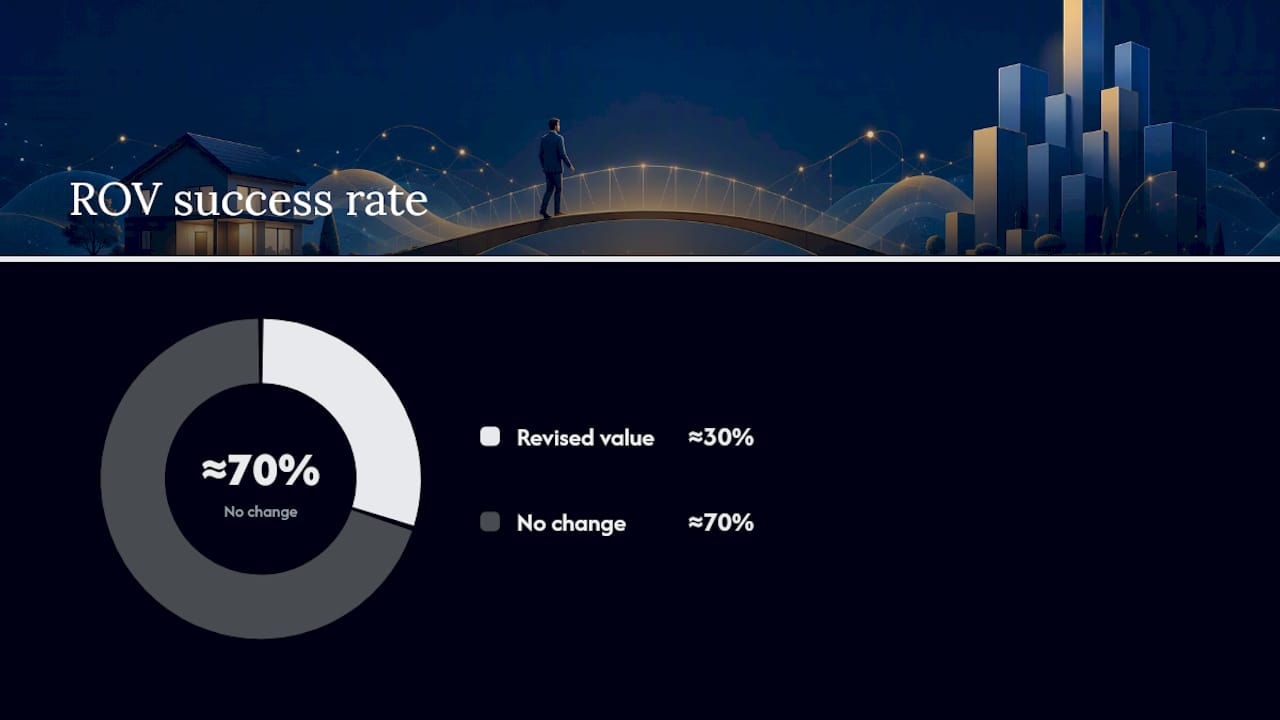
| Try ROV before spending cash | Success runs around 30% within 3 to 5 business days, making it the logical first step. |
| Match your cap to the market | Use roughly 3 to 5% in hot markets, 2 to 3% in moderate ones, and none in a buyer's market. |
| Recalculate cash-to-close early | Factor in PMI shifts and closing costs before you submit an offer with a coverage clause. |
| Confirm clause wording with counsel | An unclear or uncapped clause risks earnest money forfeiture if you can't meet the obligation. |
This article is general information, not a substitute for advice from a qualified financial advisor. Consult a qualified financial professional about your own circumstances before acting on anything here.
Table of Contents
- What Is an Appraisal Gap and Why Do Appraisals Come In Low?
- How Gap Coverage Clauses Differ From Contingencies and Waivers
- What to Do When the Appraisal Comes In Low
- Setting a Realistic Cap and Running the Cash-to-Close Math
- How the Reconsideration of Value Process Actually Works
- The Legal Risk of an Unmet Coverage Obligation
- How Luxury Buyers Manage Appraisal Risk Before It Becomes a Problem
- Why the Cap, Not the Waiver, Should Drive Your Strategy
- Sources
- FAQ
What Is an Appraisal Gap and Why Do Appraisals Come In Low?
Your lender bases the loan amount on whichever is lower: the purchase price or the appraised value. When the appraisal lands under your offer, the loan shrinks and you're left covering the difference yourself or renegotiating.
Appraisals miss the mark for reasons that have nothing to do with the home's real worth:
- Limited recent comparable sales in the neighborhood, especially in thin luxury or new-construction segments.
- Timing lags, where a fast-appreciating market outpaces the sales data appraisers must rely on.
- Overlooked features, like a renovated kitchen, a view lot, or acreage that wasn't factored properly.
- Appraisal scope limits, such as a rushed inspection or an appraiser unfamiliar with a niche property type.
It helps to separate two terms buyers often blur together. A "low appraisal" is simply the valuation result. An "appraisal gap" is the contract concept: the dollar distance between that valuation and your agreed price, and whose problem it becomes.
How Gap Coverage Clauses Differ From Contingencies and Waivers
A gap coverage clause typically includes four moving parts: a dollar cap, the trigger (the appraisal coming in below price), instructions for handling any escrow already committed, and language spelling out how the clause interacts with your financing contingency.
Three distinct structures show up in contracts, and confusing them is where buyers get hurt:
- Capped coverage commits you to a specific dollar amount, after which your appraisal contingency (if retained) can still let you exit or renegotiate.
- Full waiver removes the appraisal contingency entirely, leaving no dollar ceiling and no exit if the value comes in far short.
- Appraisal contingency alone (no coverage) lets you cancel or renegotiate freely if the appraisal disappoints, but it's the weakest competitive position in a multiple-offer situation.
"Buyer agrees to cover any appraisal shortfall up to $15,000, above which the appraisal contingency remains in effect." That single sentence is the difference between a bounded risk and an open-ended one, and every buyer should be able to point to language just like it before signing.
Ask your agent to draft the cap as an exact figure, not a vague percentage reference, so there's no ambiguity about what you owe.
What to Do When the Appraisal Comes In Low
A low appraisal isn't a dead deal. It's a decision point, and the order in which you work through your options matters.
- File a Reconsideration of Value (ROV) first. Ask your lender to challenge the number using stronger comparable sales or corrections to factual errors, such as a missed square-footage figure or an ignored renovation.
- Renegotiate with the seller. In markets where a listing has sat, or where the seller has other motivations to close, sellers will often meet you partway or absorb some of the difference.
- Cover the shortfall in cash if it's within your cap. Recalculate your full cash-to-close figure first. A lower appraised value can shift your loan-to-value ratio and even trigger private mortgage insurance you hadn't budgeted for.
- Walk away if your contract allows it. If the gap exceeds your cap and you retained any exit right, exercising it is often smarter than stretching your reserves thin to save a deal that's already outpriced the market.
Pro Tip: Never treat your gap coverage cap as a formality during offer negotiations. Run the cash-to-close math on your worst-case scenario before you submit the offer, not after the appraisal report lands in your inbox.
Setting a Realistic Cap and Running the Cash-to-Close Math
Your cap should reflect the market you're bidding in, not just what feels competitive on paper. In highly competitive markets, buyers commonly offer coverage up to 3 to 5 percent of the purchase price, in moderate markets, 2 to 3 percent is more typical, and in a buyer's market it usually makes sense to keep your full appraisal contingency rather than offer any coverage at all.
Once you have a candidate cap, build your cash-to-close estimate:
- Start with your planned down payment.
- Add your coverage cap in full, since that's your worst-case exposure.
- Add standard closing costs and any lender-required reserves.
- Check whether a smaller effective down payment pushes you into PMI territory.
Those figures assume the appraisal comes in exactly at your cap's threshold. A smaller gap costs less; the cap is your ceiling, not your expected outcome. Buyers should weigh a cap against actual cash reserves and local comps, not against how confident they feel about winning the bid.
How the Reconsideration of Value Process Actually Works
Your lender submits the ROV, though the request originates with you and your agent supplying the ammunition: corrected square footage, overlooked comparable sales, or documentation the original appraiser missed.
The process moves faster than most buyers expect:
- Turnaround typically runs 3 to 5 business days once the lender submits your package.
- Success isn't guaranteed, but it isn't rare either.
Reported ROV success rates sit around 30 percent, which means roughly one in three challenges results in a revised value that closes the gap partially or fully. Given that timeline and odds, filing an ROV before you touch your cash reserves or reopen price negotiations is almost always the right first move, particularly when you suspect the appraiser missed comparable sales or made a factual error rather than simply forming a conservative opinion of value.
The Legal Risk of an Unmet Coverage Obligation
Signing a gap coverage clause creates a real contractual duty, not a soft promise. If you cannot produce the cash to meet your capped obligation, you're in breach of contract, and the most common consequence is forfeiture of your earnest money deposit, which the seller can typically retain as liquidated damages.
Good drafting prevents most disputes before they start:
- The cap should be a specific dollar figure, never a vague percentage reference open to interpretation.
- The clause needs clear language on how it interacts with your financing contingency and when your exit rights, if any, reactivate.
- Timelines for the appraisal itself and for any ROV attempt should be spelled out, so nobody is guessing about deadlines mid-transaction.
Before signing anything without a cap, or with wording you don't fully understand, confirm the terms with both your lender and a real estate attorney. An uncapped waiver can look like a strong offer strategy right up until the appraisal comes back tens of thousands of dollars short.
How Luxury Buyers Manage Appraisal Risk Before It Becomes a Problem
At Yhluxrealestate, Yelena Horton works with high-net-worth buyers navigating Las Vegas's luxury segment, where limited comparable sales make appraisal gaps more common, not less. Backed by Sotheby's International Realty's global network and a relocation concierge built for out-of-state buyers, the approach favors preparation over hope.
Buyers with stronger liquidity often get ahead of the issue entirely:
- Commissioning an independent, pre-offer appraisal or valuation opinion on unique or high-value properties before submitting a bid.
- Maintaining higher cash reserves specifically to make a targeted, capped waiver credible rather than reckless.
- Coordinating early with an appraisal-savvy agent and lender so the coverage clause reflects the property's actual comparable landscape, not a generic percentage pulled from a template.
Why the Cap, Not the Waiver, Should Drive Your Strategy
Most advice on this subject treats appraisal gap coverage as a binary choice: waive protections and win, or keep them and lose the bid. That framing is lazy, and it costs buyers money. The more useful question isn't whether to offer coverage. It's how precisely you can calculate your worst-case cash number before you ever submit the offer.
The research on this is consistent: Reconsiderations of Value succeed roughly 30 percent of the time in about a week, yet many buyers skip straight to writing a check or walking away because they never built the ROV step into their plan. That's the gap between what the process promises and what buyers actually use.
If there's one habit worth adopting, it's this: treat your coverage cap as a number you'd be comfortable paying in cash tomorrow, not a number that sounds competitive today. A well-drafted clause with a firm cap and a clear ROV pathway wins offers just as effectively as a blank check, without the same exposure if the appraisal comes in far below expectations.
— Yelena
Sources
- Appraisal gap: What it means for buyers | Rocket Mortgage
- How appraisal gap coverage works in competitive markets | LegalClarity
- Appraisal Gap Coverage vs Waiver: The 3 Options | Own Luxury Homes®
- Appraisal gap: What buyers can do | NerdWallet
FAQ
What Is a Standard Appraisal Gap Coverage Amount?
There's no fixed standard, but common guidance ties the cap to market competitiveness: roughly 3 to 5 percent of the purchase price in hot markets and 2 to 3 percent in moderate ones.
Who Pays for Appraisal Gap Coverage?
The buyer pays. The clause obligates you to cover the specified shortfall between the appraised value and the purchase price, since lenders won't fund above the appraised value.
What Does a $5,000 Appraisal Gap Mean?
It means the appraisal came in below your agreed purchase price, and under a gap coverage clause covering that amount, you'd need to bring that difference to closing in addition to your planned down payment and costs.
What Does a $15,000 Appraisal Gap Mean?
A $15,000 gap works the same way at a larger scale: the appraised value fell $15,000 short of your offer. If your clause caps coverage at $15,000 or higher, you're contractually obligated to bring that difference in cash to close the deal.
Can I Still Walk Away if I Sign a Gap Coverage Clause?
Only if your contract retains an appraisal contingency that reactivates once the shortfall exceeds your capped amount; a full waiver removes that exit entirely, so check the exact wording before signing.